Owner
- An older building keeps working with its original panels.
- Holes at the eave are fixed before they reach the purlins.
- Recoats later go over this coating after a wash.

As a Bluffton metal roof coating contractor, we restore older exposed-fastener roofs on industrial buildings, warehouses, and farm facilities in Bluffton, Indiana.
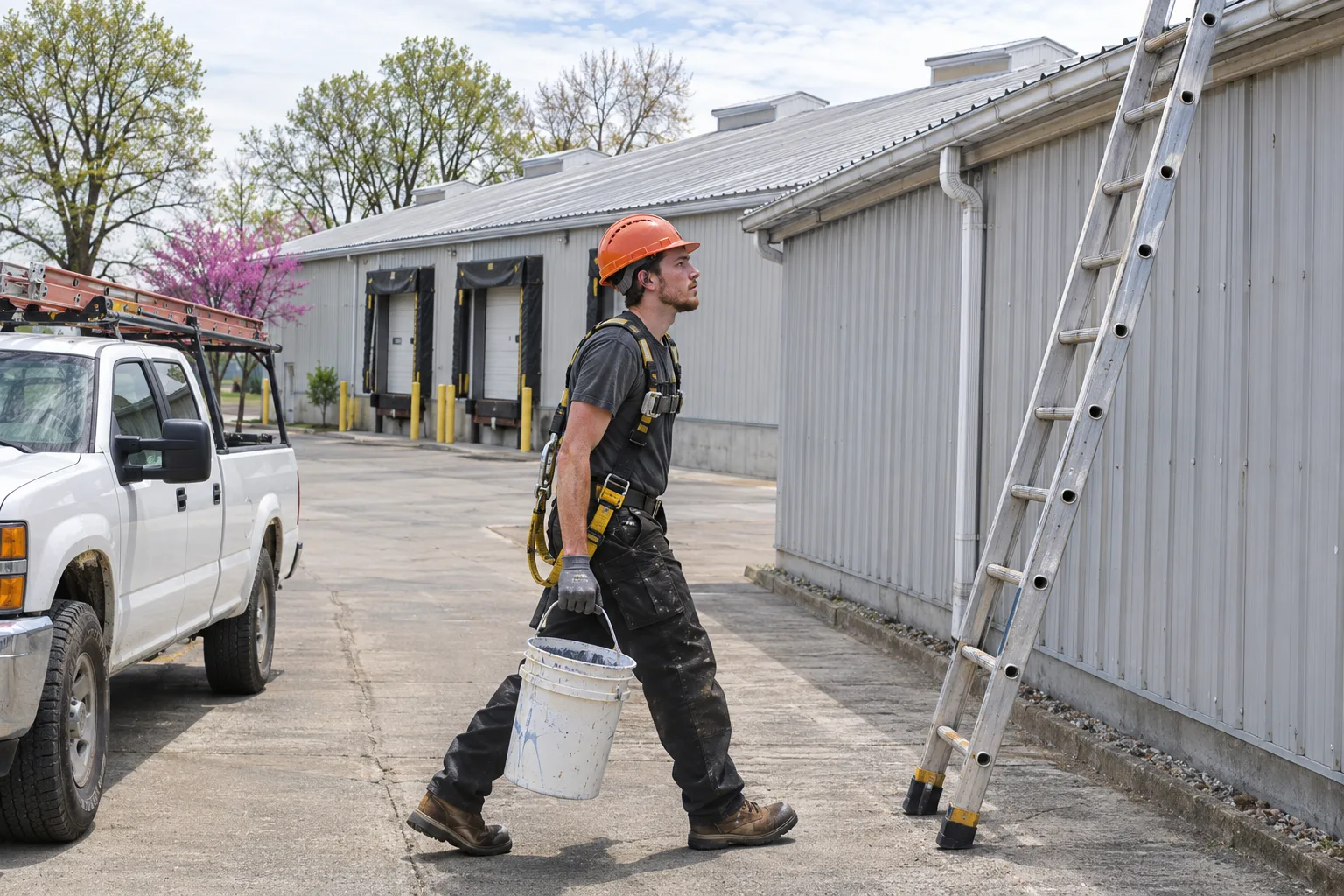
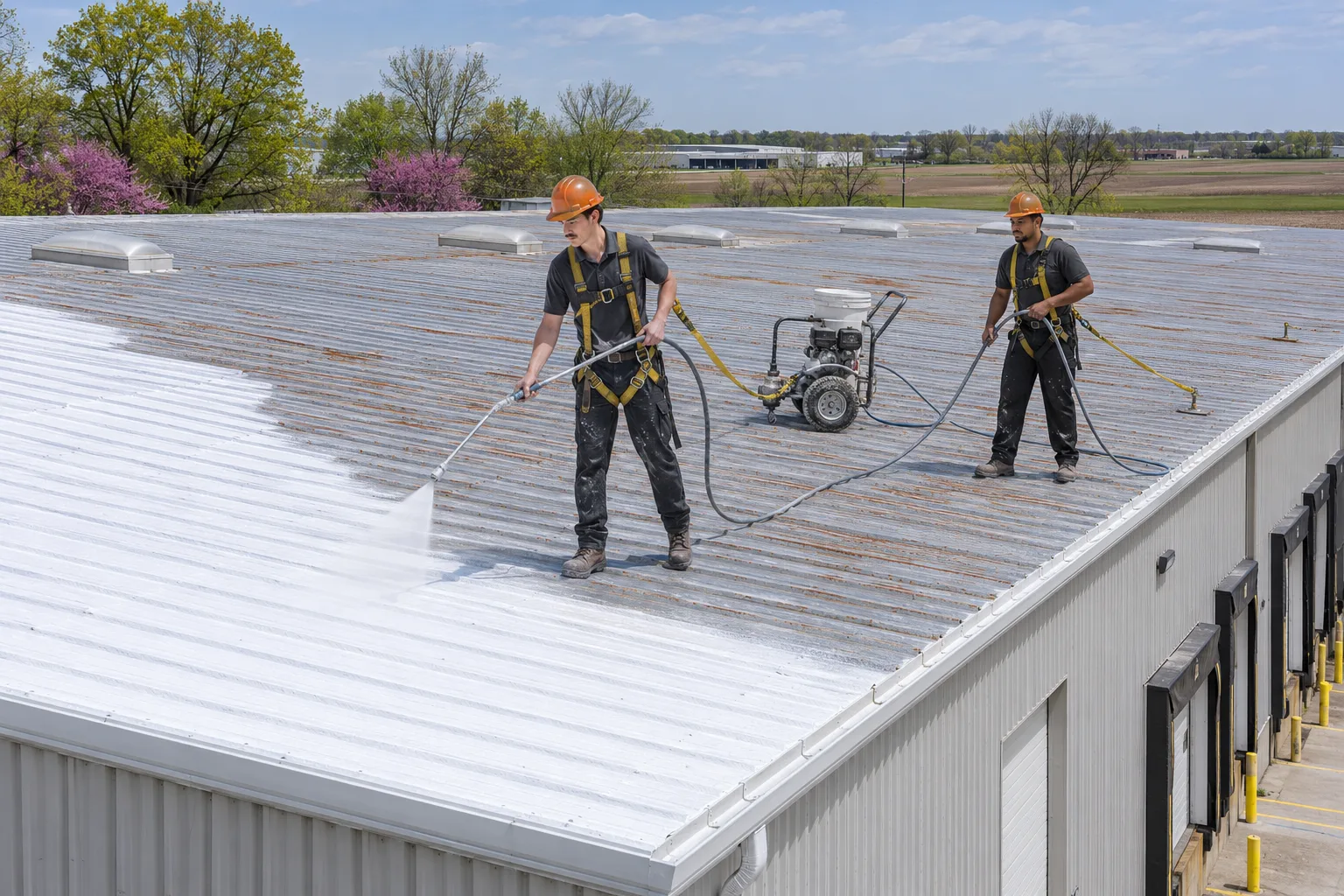
Bluffton metal roof coating jobs are planned around the weather, because spray coating needs dry panels and calm air to stay on the roof.
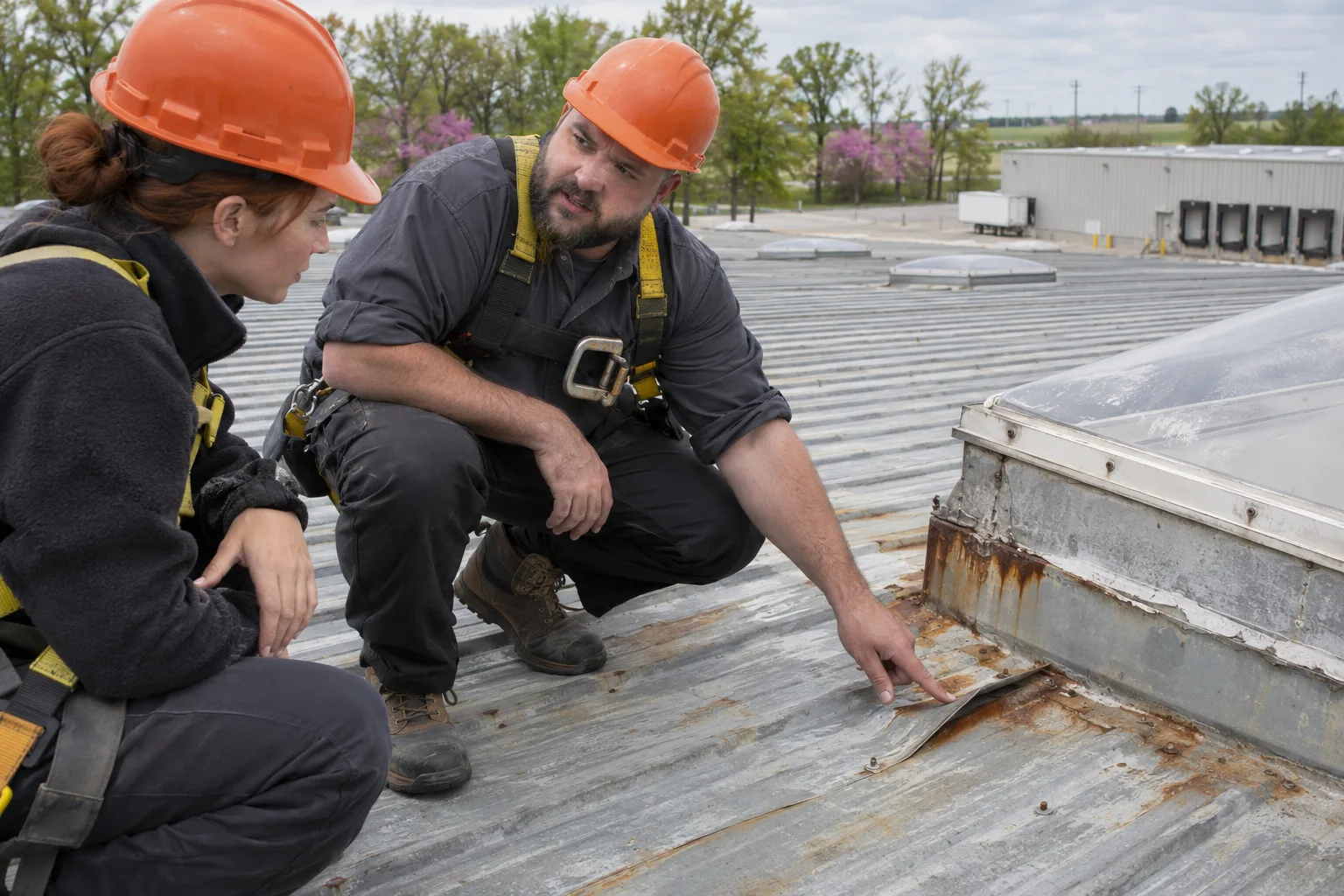
Older Bluffton buildings often sit near parked trucks, neighbors, or other buildings. Spray days are picked for low wind, and rolling is used near edges when the breeze picks up, so coating stays on the roof.
Dry, mild days matter just as much. Panels must be free of dew and frost, and acrylic needs warmer air to cure, so jobs are set between spring and fall with a dry forecast.
Older metal buildings around Bluffton show these conditions most often.
Screws from decades ago have hard washers and loose threads. Most are replaced with oversized screws before coating.
Side and end laps drift apart as panels heat and cool. Stitch screws pull them tight again, then fabric covers each lap.
Holes along the eave let water straight in. Those panels are cut out or replaced before any coating.
Older finishes wear through to bare metal on the sunny side. Those areas are cleaned and primed with a rust-inhibiting primer.
Ice and snow load bend older gutters away from the eave. They are re-hung and sealed so meltwater leaves the roof.
Restoring an older roof pays off for each group in its own way.
Older Bluffton buildings can take any of our five systems. These notes show when each one fits.
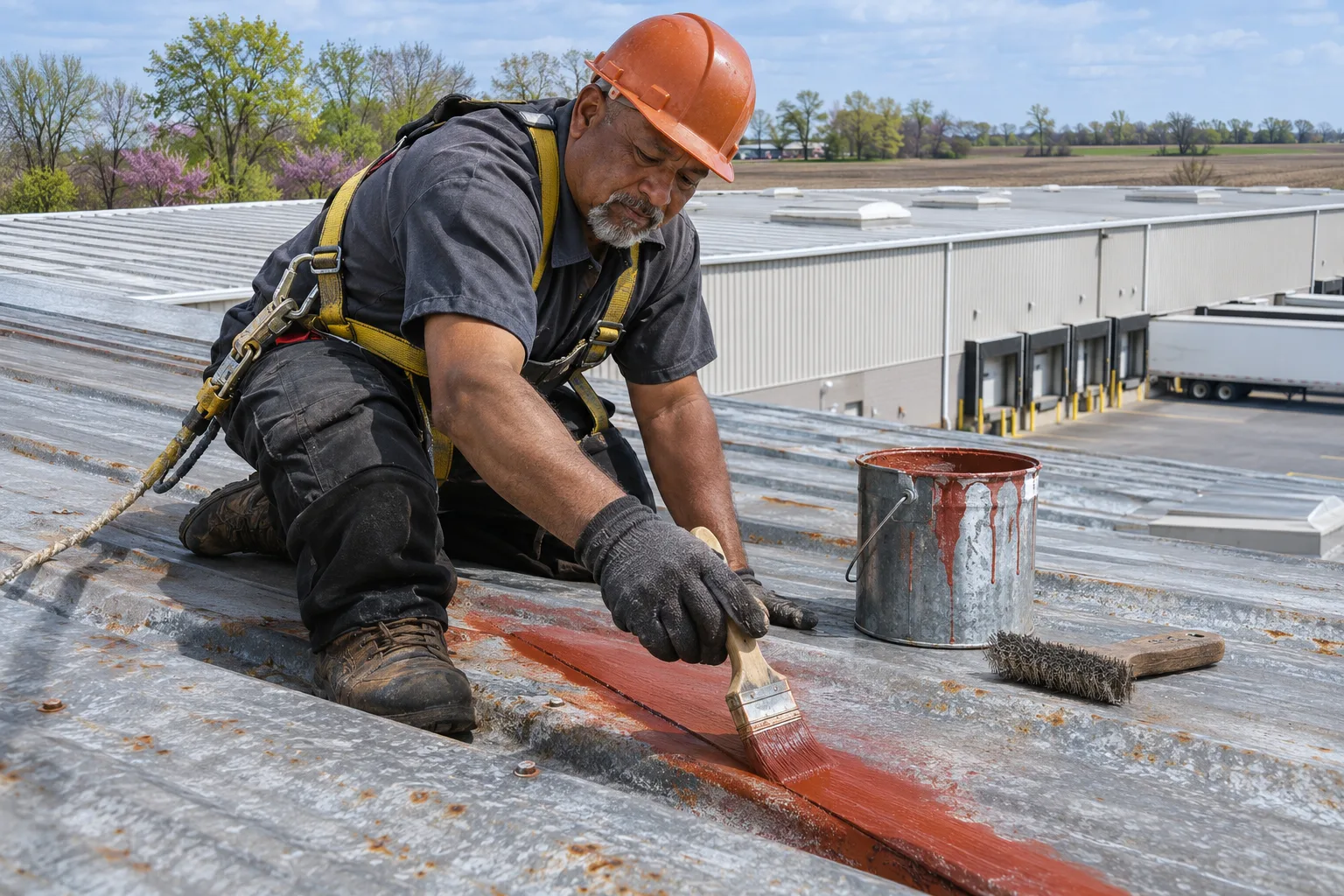
Older exposed-fastener roofs with firm steel get the full metal system.
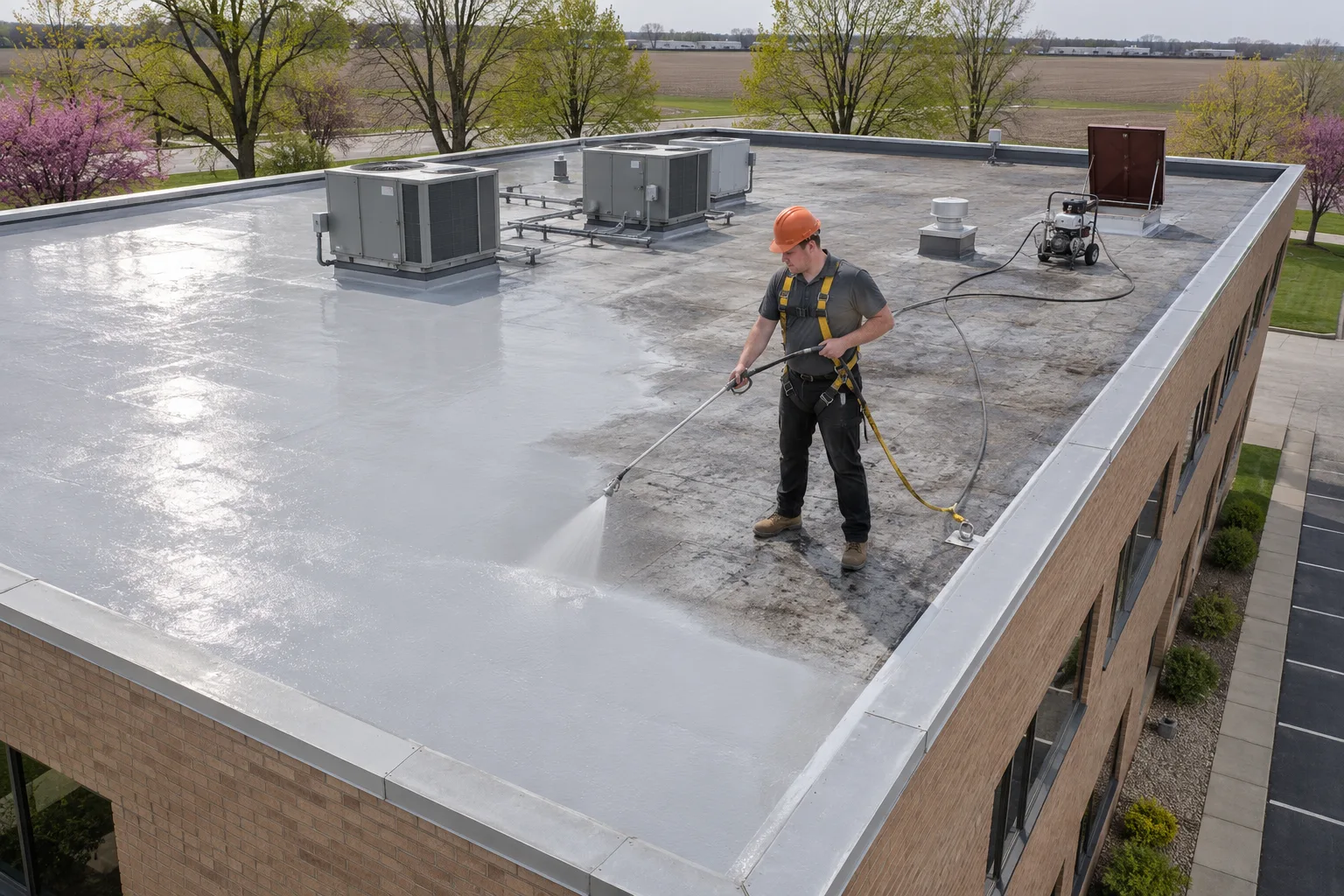
Flat sections and low spots that keep water after storms take silicone.
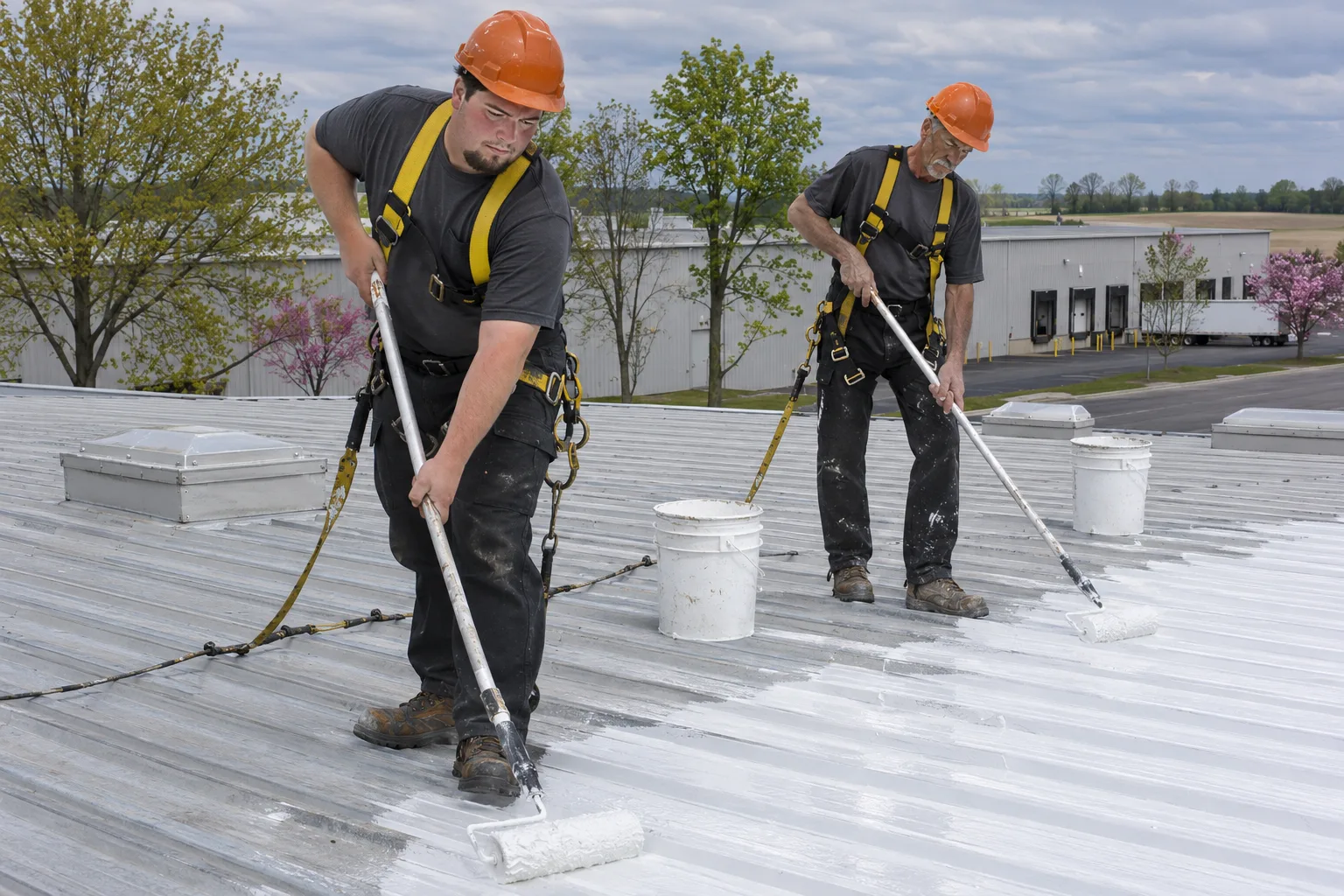
Pitched roofs that drain well take acrylic, applied in dry, mild weather.
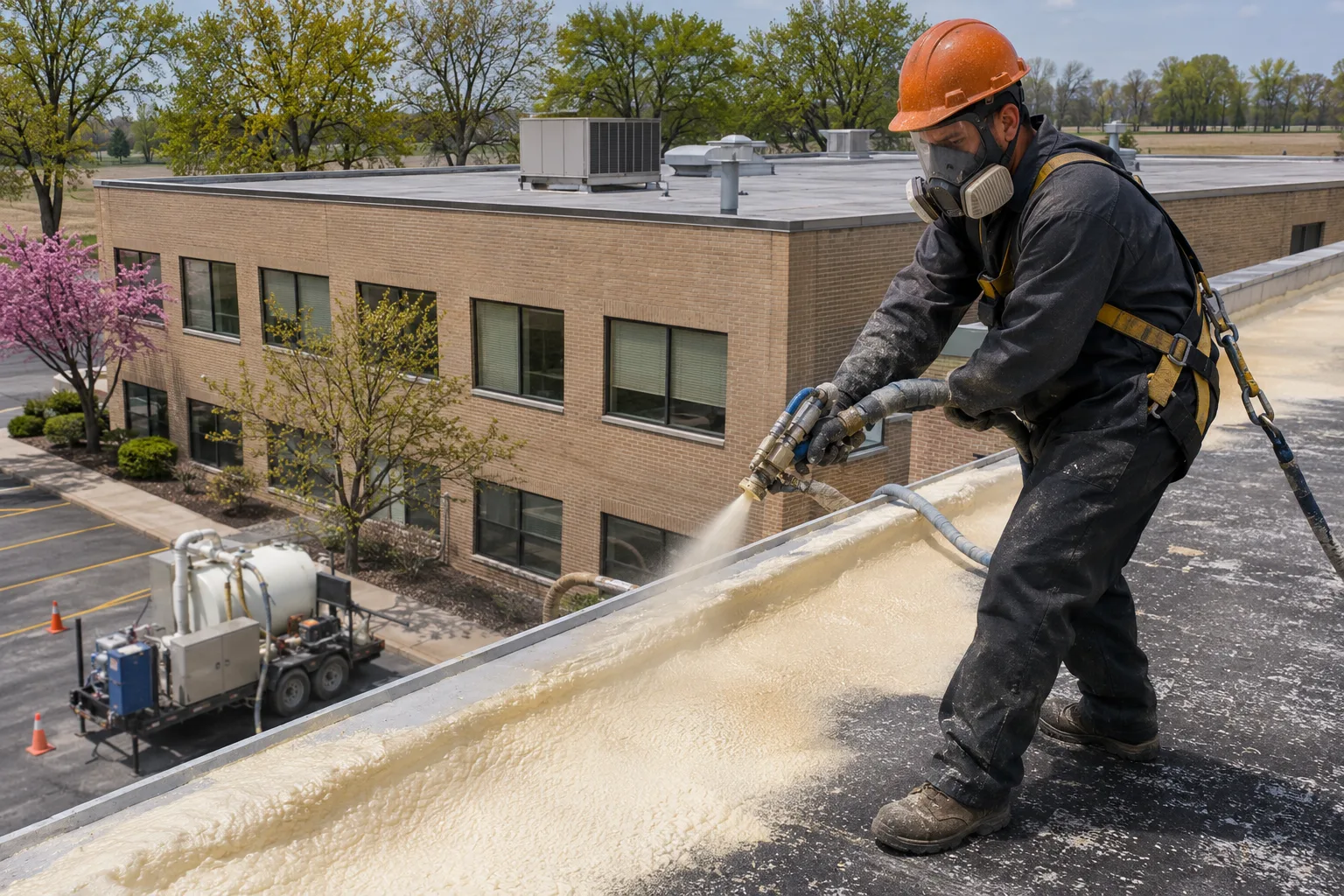
Roofs leaking at laps everywhere can take foam with a protective topcoat.
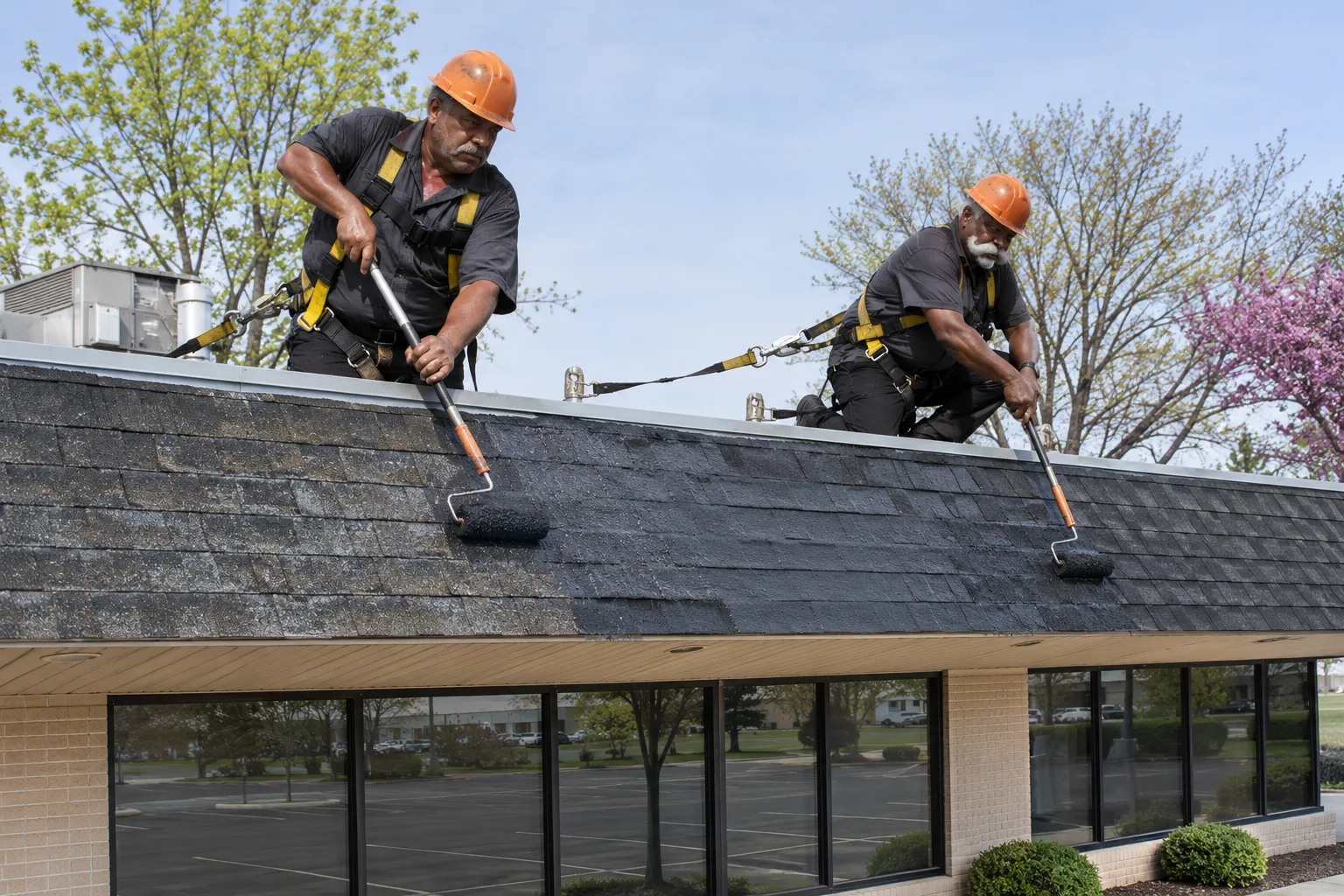
Shingled offices on an industrial lot take a breathable shingle coating.
Call and tell us where you see light or water. Holes at the eave come first, before any coating is planned.
(260) 620-8962Weather sets the calendar. These are the steps once a window opens.
We walk the roof, test the old screws, mark open laps and holes at the eave, and note what sits around the building that overspray could reach.
Rusted-through panels are replaced, laps are stitched tight, and old screws are swapped for oversized ones with new washers.
The roof is washed and primed, and nearby vehicles and openings are covered or moved before spraying.
Coating goes on during a calm, dry window, with rollers near edges if wind rises, and thickness is logged before we leave.
We also cover these towns. For a building elsewhere, call us or send us a message.
What owners of older Bluffton buildings ask first.
Bluffton is part of our area. We coat roofs on industrial buildings, warehouses, and farm facilities there. Older exposed-fastener roofs usually need new screws and sealed laps before coating, and spraying is set for calm days to keep overspray on the roof.
Our coating range is about $2.50 to $4.00 per square foot, with replacement around $5 to $8. Older roofs often need more screws and lap repairs, which shows up in the estimate line by line after the walk.
We work from Fort Wayne, south down to Bluffton, and plan roof walks to match your schedule. Call with the address and the age of the building if you know it.
Often yes. Panels with holes are replaced or patched with new steel first, then the whole roof is coated. Wide areas rusted through change the answer to replacement.
Spraying stops near the edges, and crews switch to rollers or wait out the gust. Coating is never sprayed toward vehicles or neighbors in a breeze.
Old screws often spin in worn holes, so we step up to a larger diameter that bites fresh steel, each with a new washer. Every head is then sealed before the coating covers it.
Late spring through early fall gives the most dry, mild days. Acrylic needs the warmer stretches, and silicone tolerates cooler days, so the system choice and the calendar are planned together.
Tell us the age of the building and where it leaks. We will walk the roof and plan the job around the weather.