Owner
- Ponding areas stop wearing through the old finish.
- Existing roof stays in place, so no tear-off cost.
- Future recoats are silicone over silicone, with no stripping.

As a Fort Wayne silicone roof coating contractor, we coat low-slope metal, single-ply, and foam roofs where water stands after storms and spring thaws.
Fort Wayne silicone roof coating earns its higher cost where water lingers. These lists show where it fits and where another system works better.
Low roofs show their problems as water patterns. These are the ones we sort before silicone goes down.
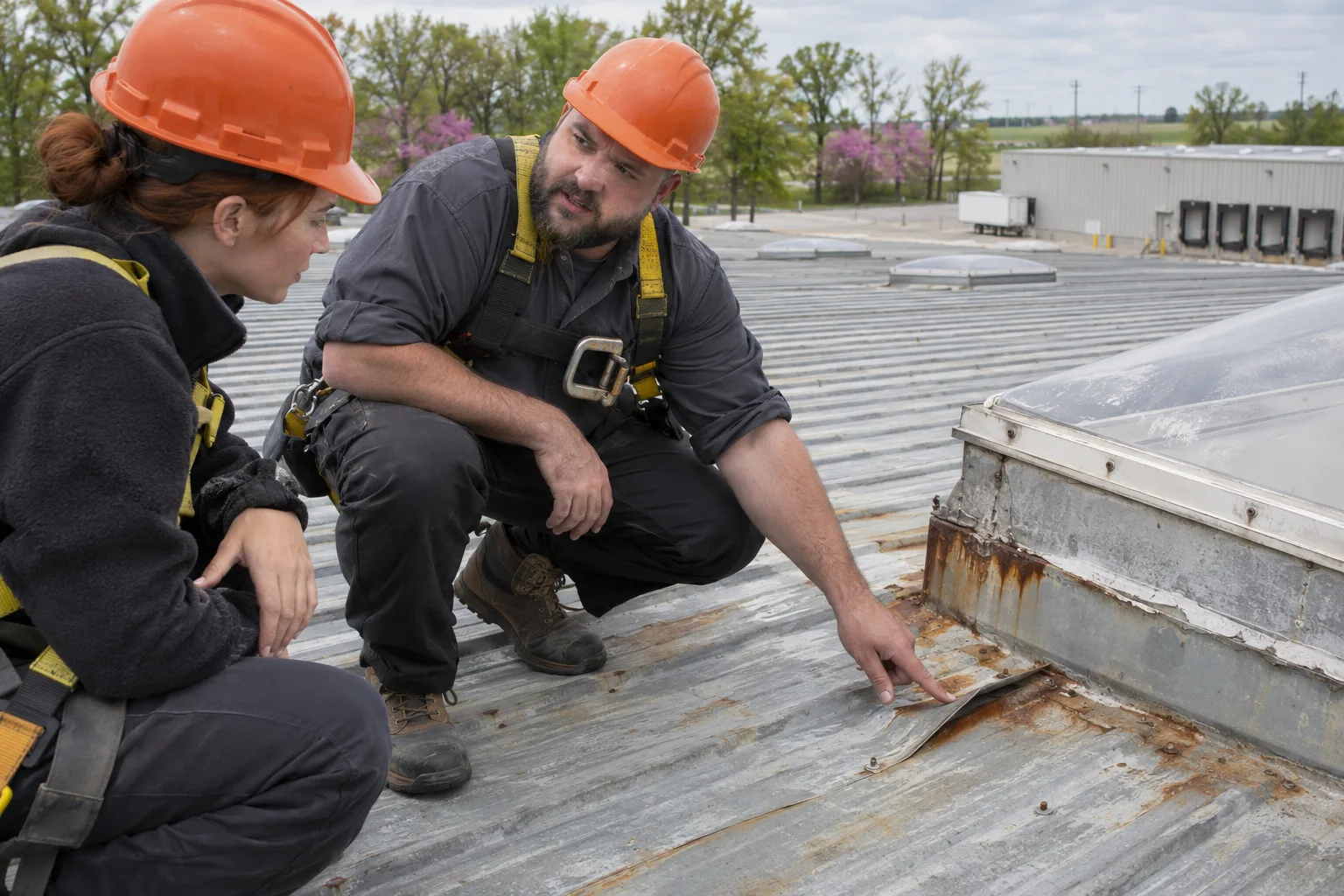
A ring of grime shows where water sat for days. Silicone handles the water, but a clogged drain or a sagging deck is fixed first.
Water at a ceiling tile under a drain points to a loose clamping ring or split flashing. That drain gets rebuilt before anything is coated.
Seam edges lifting on an old membrane let water under the sheet. Loose edges are cleaned and sealed, then reinforced with fabric.
A spongy feel underfoot means wet insulation. Cores confirm it, and wet boards are replaced so silicone never seals water into the roof.
Pocked foam after a spring storm needs its topcoat checked. Small bruises get sealant, then a full silicone recoat.
Old silicone collects dirt and looks gray. That lowers reflectivity, and a wash plus a fresh silicone coat restores it.
Silicone goes on in one of these four ways, depending on what the roof is made of and how water moves across it.
| Plan | Roof Type | Prep Before Silicone | Result |
|---|---|---|---|
| Full Silicone Coat | Low-slope metal or single-ply | Wash, seal seams, prime where the data sheet calls for it | One continuous silicone membrane |
| Valleys And Drains Only | Pitched metal with low valleys | Clean and prime the valley panels | Silicone where water sits, acrylic on the pitch |
| Foam Topcoat | Spray foam roof | Wash foam, repair bruises | New UV shield over existing foam |
| Silicone Recoat | An older silicone roof | Wash, repair scuffs and punctures | Fresh silicone over silicone |
Silicone does the most good on the parts of the roof that stay wet longest.
Call and describe where it sits and for how long. Lingering water near drains is where silicone does its best work.
(260) 620-8962Moisture comes first, then repairs, then silicone. The card lists what the first walk records.
We map where water stands, take moisture readings and cores at soft spots, and check every drain and seam. Wet insulation is marked for replacement.
Soaked boards are cut out and replaced with dry insulation and new membrane or panel, so the coating covers a dry roof.
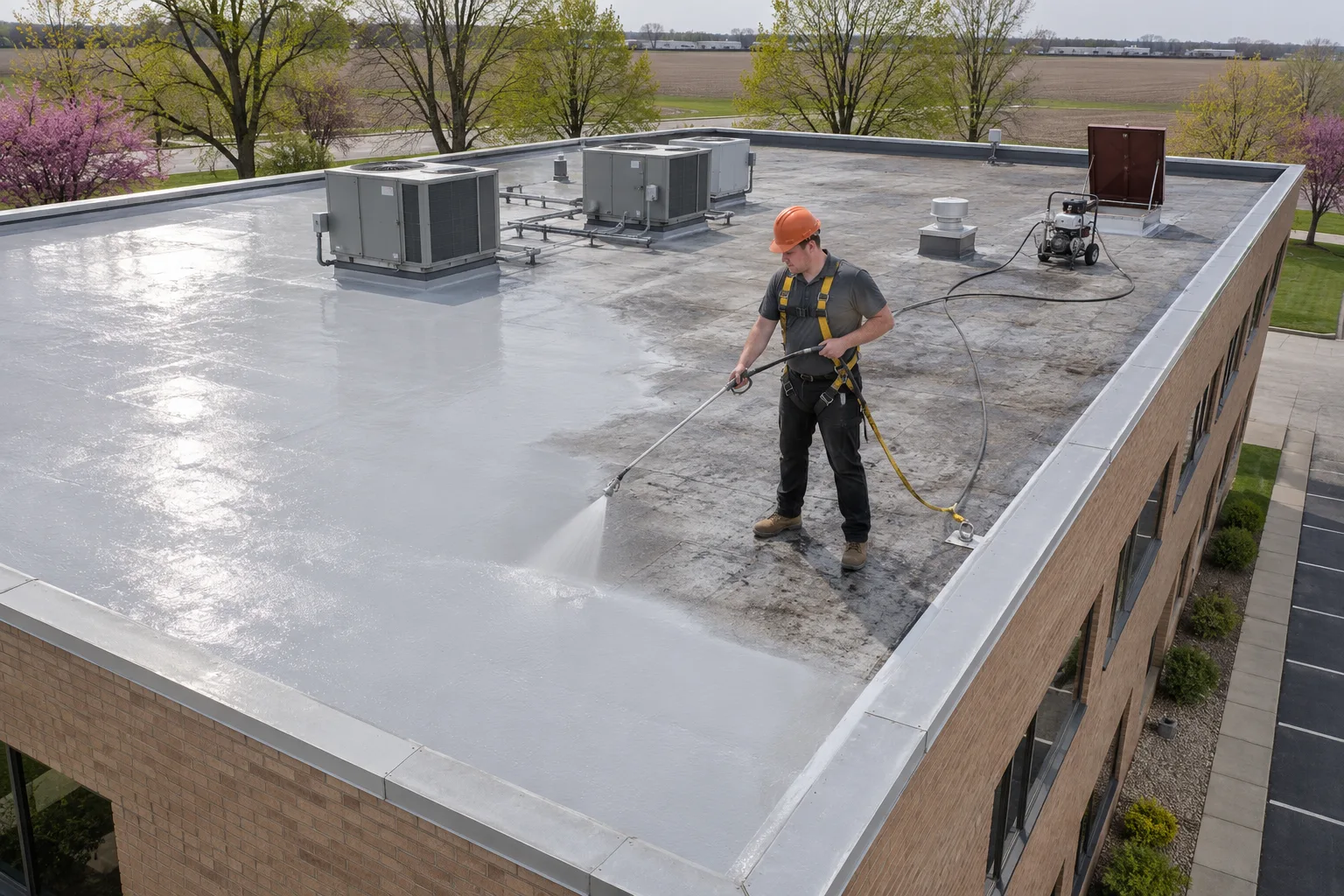
Pressure washing removes dirt and chalk. Seams, drains, and curbs are sealed and reinforced with fabric in a silicone base.
Silicone is sprayed in passes to the data-sheet thickness, with extra build in the low areas where water collects.
Thickness readings are taken across the roof and logged with photos. Any thin spot gets another pass before we leave.
Silicone often shares a roof with one of these systems.
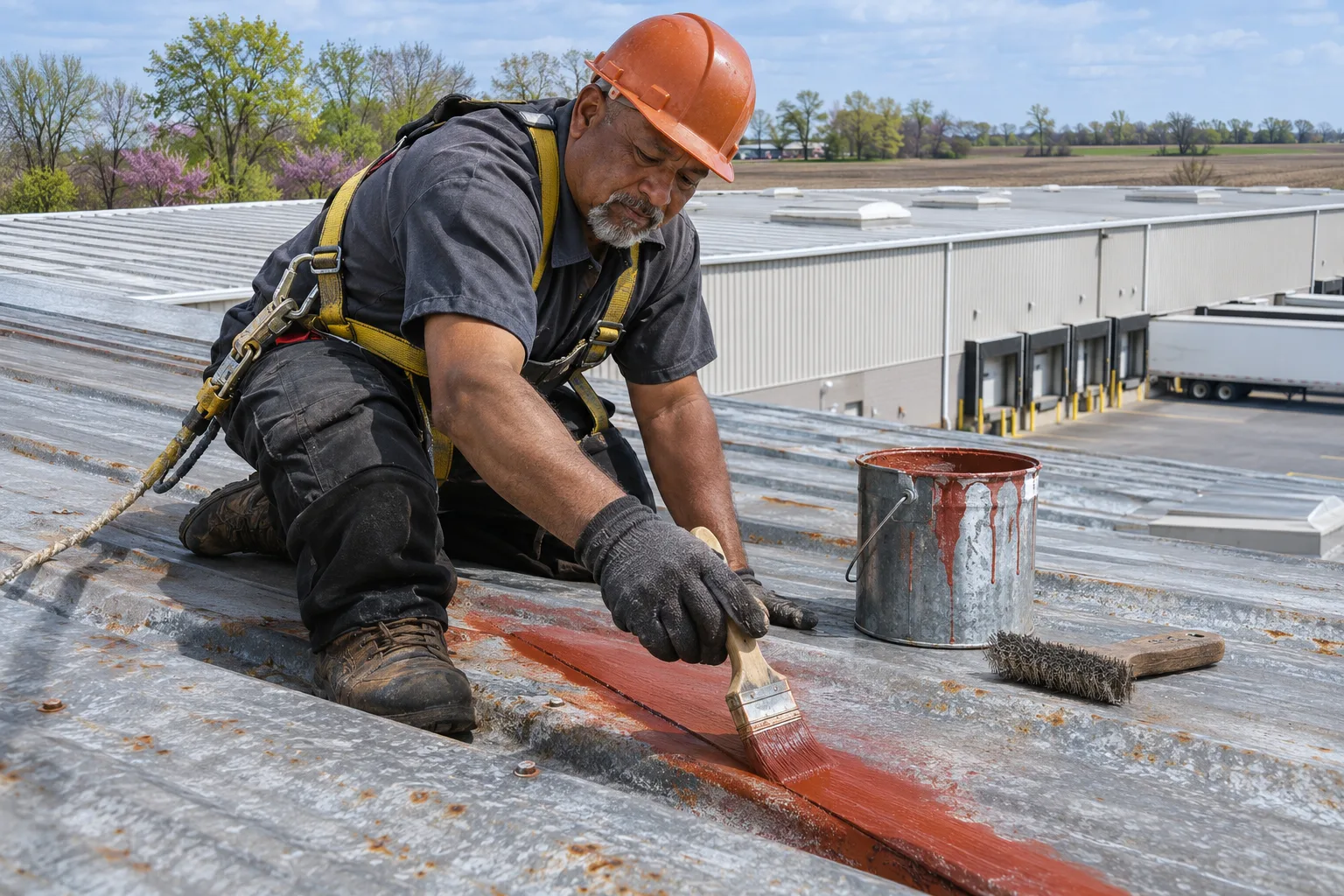
The pitched panel runs around a silicone valley get the full metal coating treatment.
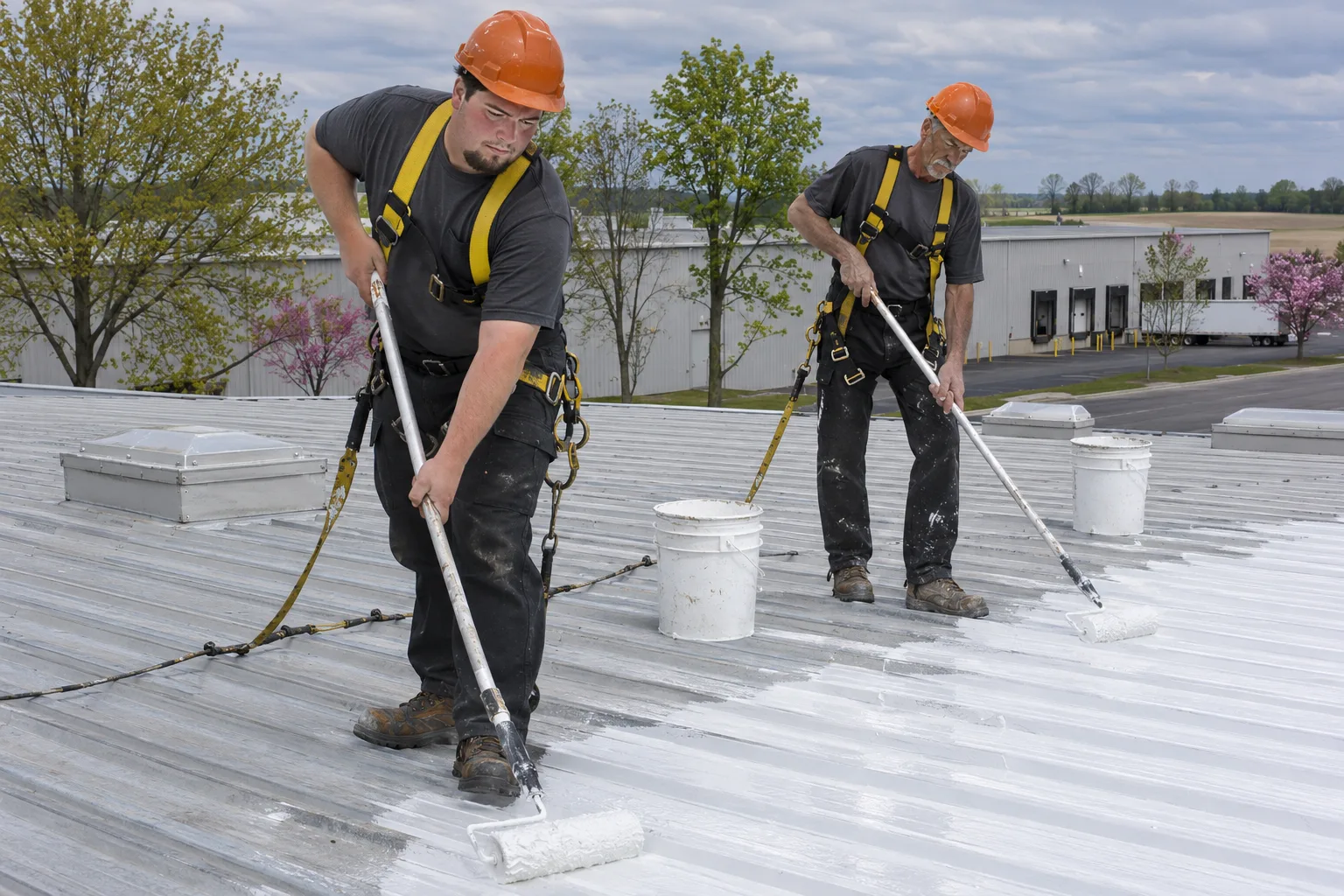
Steeper runs that drain fast take acrylic, which costs less where water never sits.
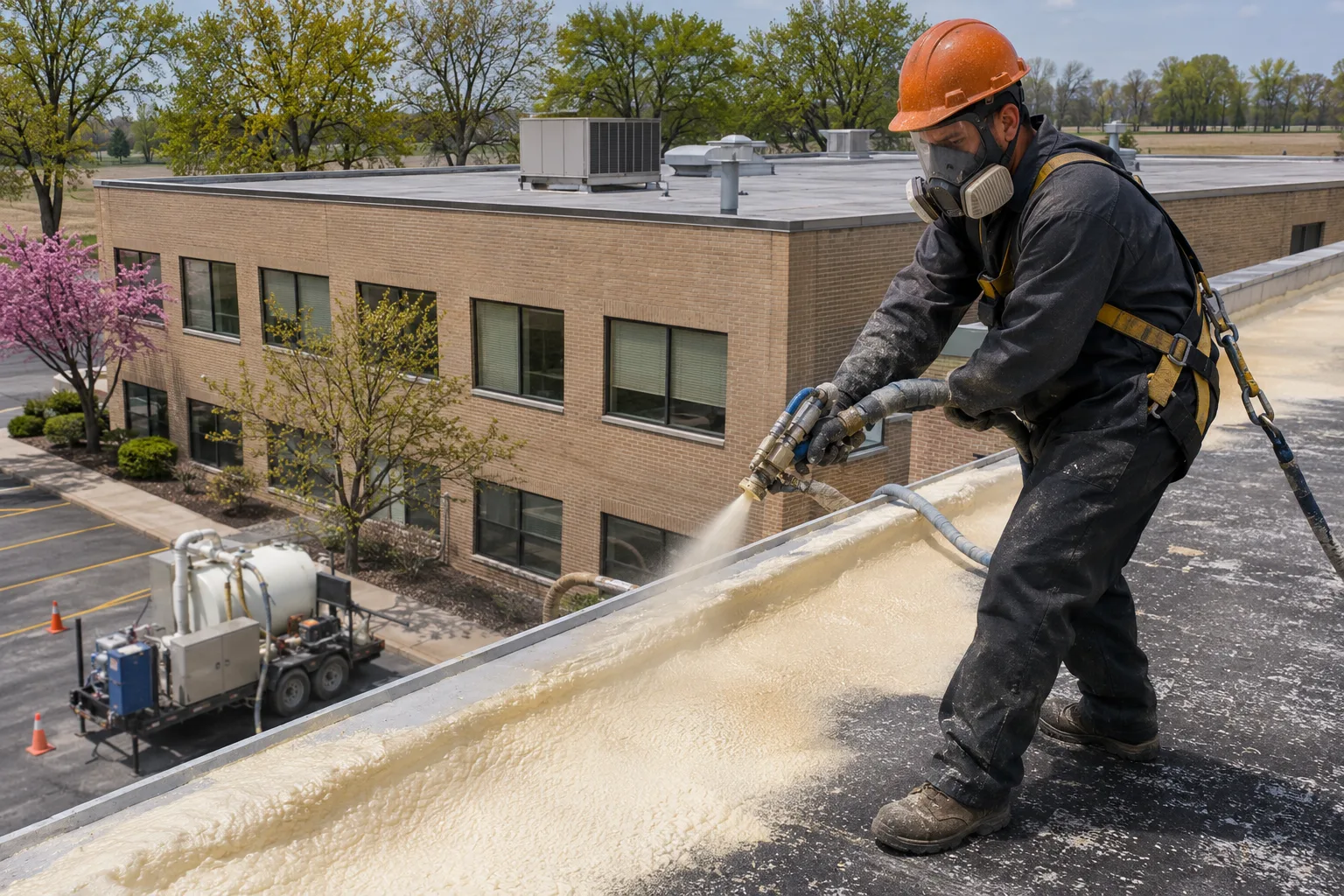
Foam builds slope toward drains, and silicone is a common topcoat over it.
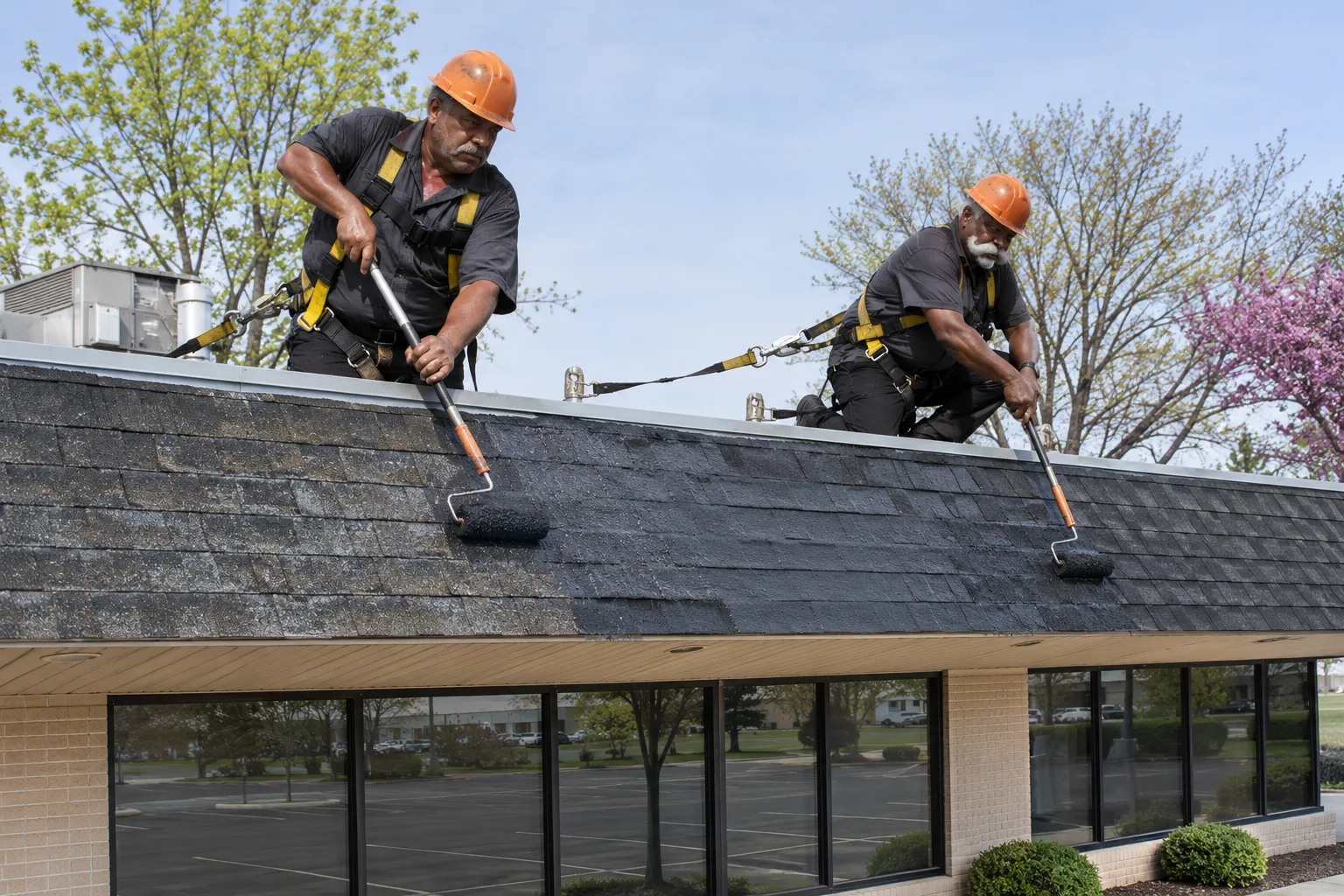
Shingle wings on the same building take a breathable shingle coating instead.
What owners ask when water stands on a low roof.
Published silicone ranges often run 10 to 20 years, with thicker specs at the top of that range. Prep, applied thickness, foot traffic, and ponding decide where a roof lands. Silicone weathers slowly in sun, and yearly checks catch hail and traffic damage early.
Silicone wins where water lingers after rain or snowmelt, since it resists ponding. Acrylic wins on pitched roofs that drain well, costing less per gallon and staying bright longer. Silicone also limits future recoats to silicone, which matters for long-term plans.
It works when the roof underneath is dry and clean. Silicone bonds to prepared metal, many single-ply sheets, and foam. It cannot fix wet insulation or a failing deck, so cores and moisture readings come first and wet areas are replaced.
Once cured, silicone handles ponding, but it goes on a dry surface, never into standing water. Where ponds run deep or last for days, we look at drains, crickets, or tapered fill first, because heavy water adds weight to the deck.
Almost nothing bonds well to cured silicone except more silicone. A roof coated with silicone stays a silicone roof, so that choice is part of the plan from the first walk.
Its surface stays slightly tacky and holds dust and pollen. That dulls the white finish over time and lowers reflectivity. A gentle wash brings much of it back, and a recoat restores the rest.
Tell us where water stands and how long it stays. We will check the drains and moisture and price the silicone work.