Owner
- Panels stay on the purlins, so no tear-off debris leaves the lot.
- Primed rust spots stop eating into steel you already own.
- The system can be recoated later instead of replaced.

As a Fort Wayne commercial metal roof coating contractor, we restore exposed-fastener and R-panel roofs on plants, warehouses, and distribution centers in place.
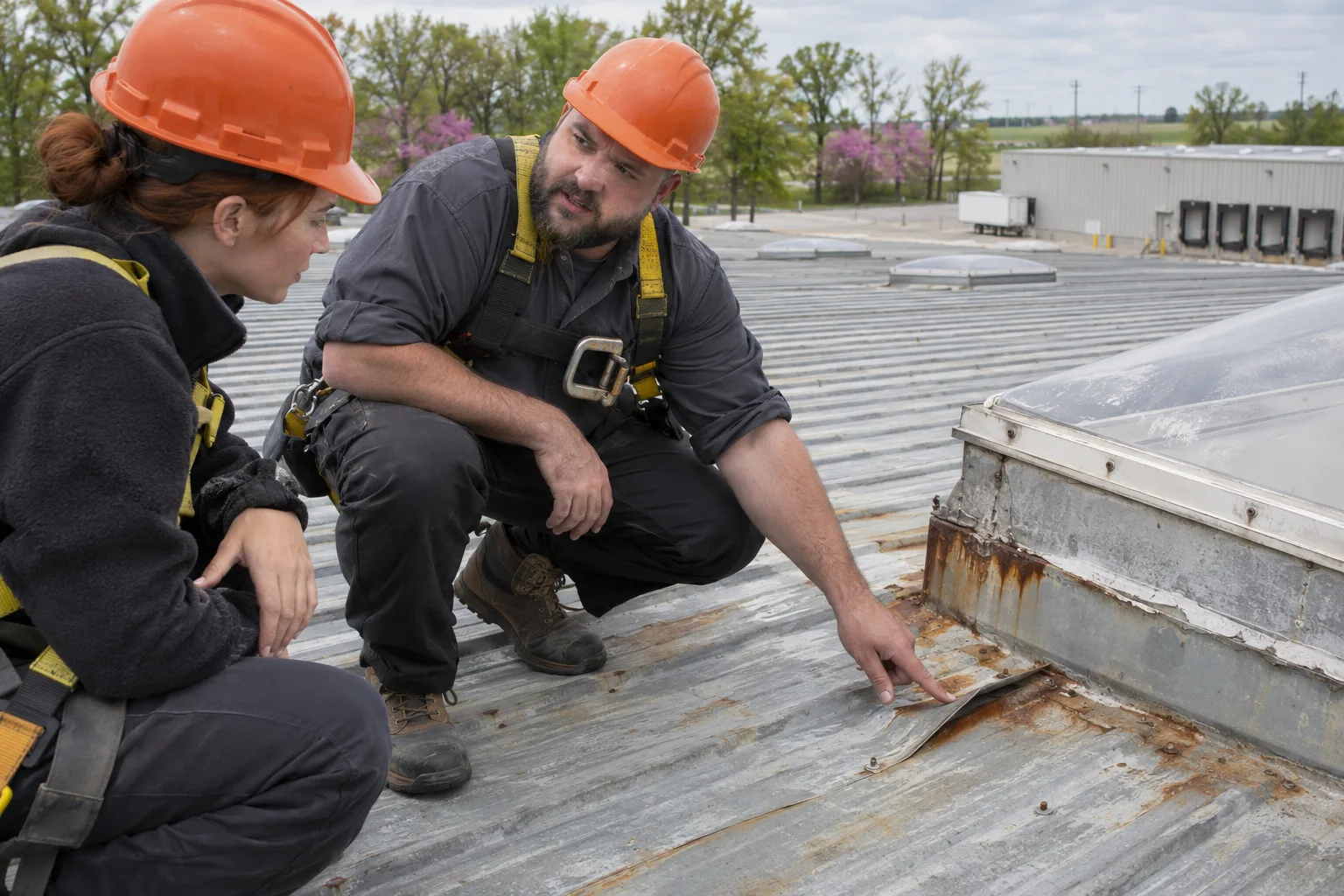
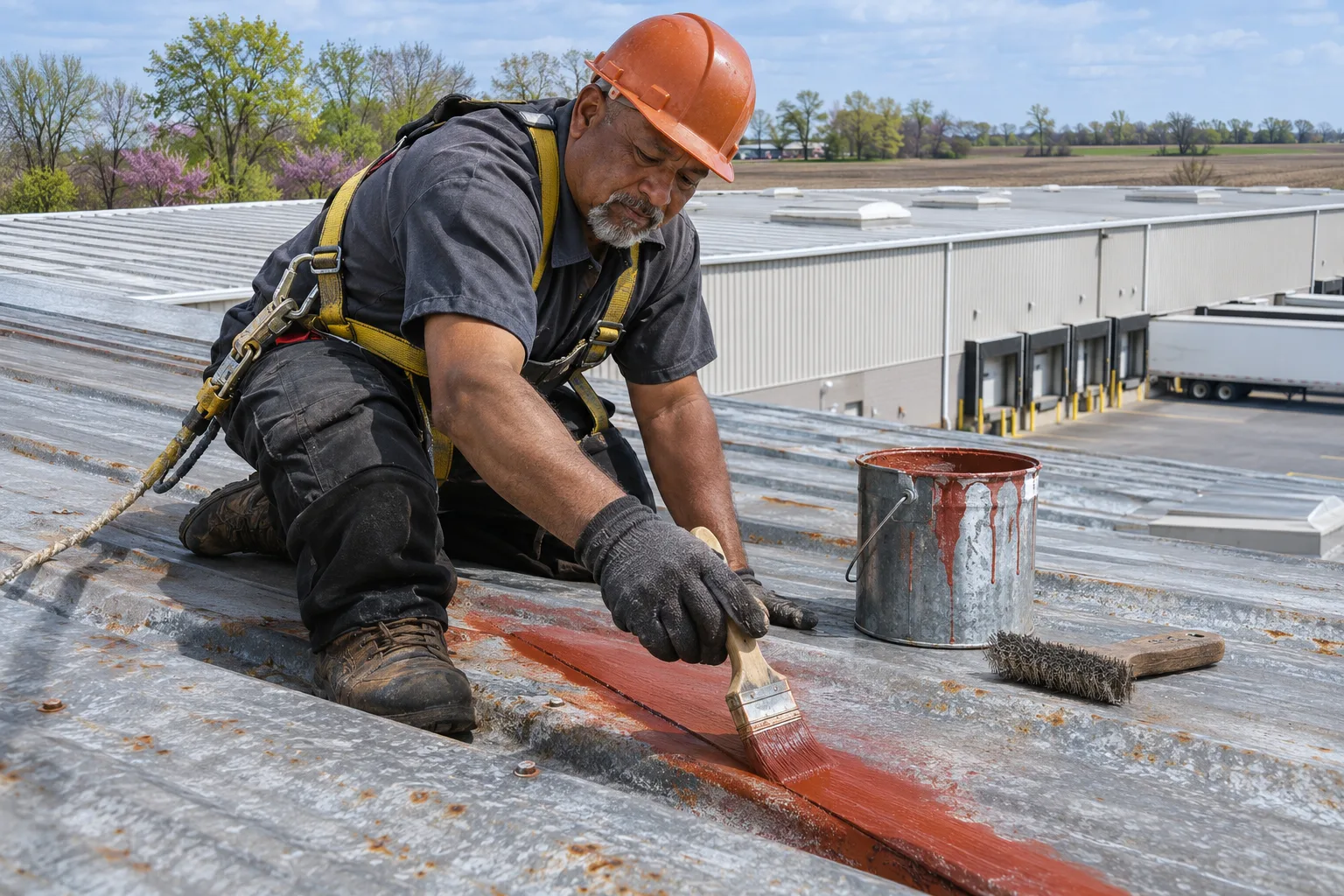
Fort Wayne commercial metal roof coating fits a roof whose steel is still firm. Compare your roof with both lists before calling.
These six conditions show up on most plant and warehouse roofs we walk. The chip shows how soon each one needs work.
Rubber washers dry out after years of sun and cold. Water follows the screw shank into the building, so each head is resealed or the screw replaced.
Two overlapping panels trap water, and rust grows between them. The lap is opened, cleaned, primed, stitched, and sealed before coating.
Fan curbs on process roofs shift as the fans vibrate. Wet tile below the curb means the flashing has opened and needs rebuilding now.
Powder on your fingertips after touching a panel is chalking. It washes off, and a bonding primer is matched to whatever finish remains.
Loose ridge caps and missing closure strips let wind push rain over the ridge. Caps are re-fastened and closures replaced before coating.
An old coat worn down to the primer at the eaves tells us how traffic and water move on the roof, which sets the new thickness.
Most commercial metal roofs in Fort Wayne get one of these four plans. The roof walk decides which one, and the estimate lists every repair line.
| Plan | Fits This Roof | Repairs First | Coating System |
|---|---|---|---|
| Restore In Place | Firm panels, surface rust, leaks at laps | Screws, laps, curb flashing | Primer, fabric at seams, two-coat acrylic or silicone |
| Split System | Pitched runs plus low valleys that pond | Same, plus drain and gutter work | Silicone in the valleys, acrylic on the pitch |
| Foam Recover | Leaks at laps across the whole roof | Wet areas cut out, panels cleaned | Foam in the ribs plus a protective topcoat |
| Panel Swap Then Coat | A few runs rusted through | New matching panels in those runs | Coating over old and new panels together |
A coated roof pays off differently for each person who depends on the building.
Call and tell us which curb leaks and what runs under it. We will look at the flashing first and plan around the line.
(260) 620-8962Five steps, the same order on every plant roof. The card lists what the first visit records.
We walk every panel run, count failed screws by section, read moisture at suspect laps, and photograph each problem. The findings set the plan and thickness.
Stripped holes get oversized screws with new washers. Each screw head is then covered with sealant so the coating is never the only barrier at a hole.
Pressure washing strips chalk and grime. Scale is wire-brushed back to firm steel and primed so the coating bonds to bare metal instead of scale.
Polyester fabric set in base coat bridges every lap, ridge cap, and curb edge, where daily heat and cold move the roof the most.
The field coat is sprayed to the data-sheet rate in roof sections, with wet-film readings logged as each section is finished.
Some roofs need a second system on part of the roof. These are the ones that pair most often with metal coating.
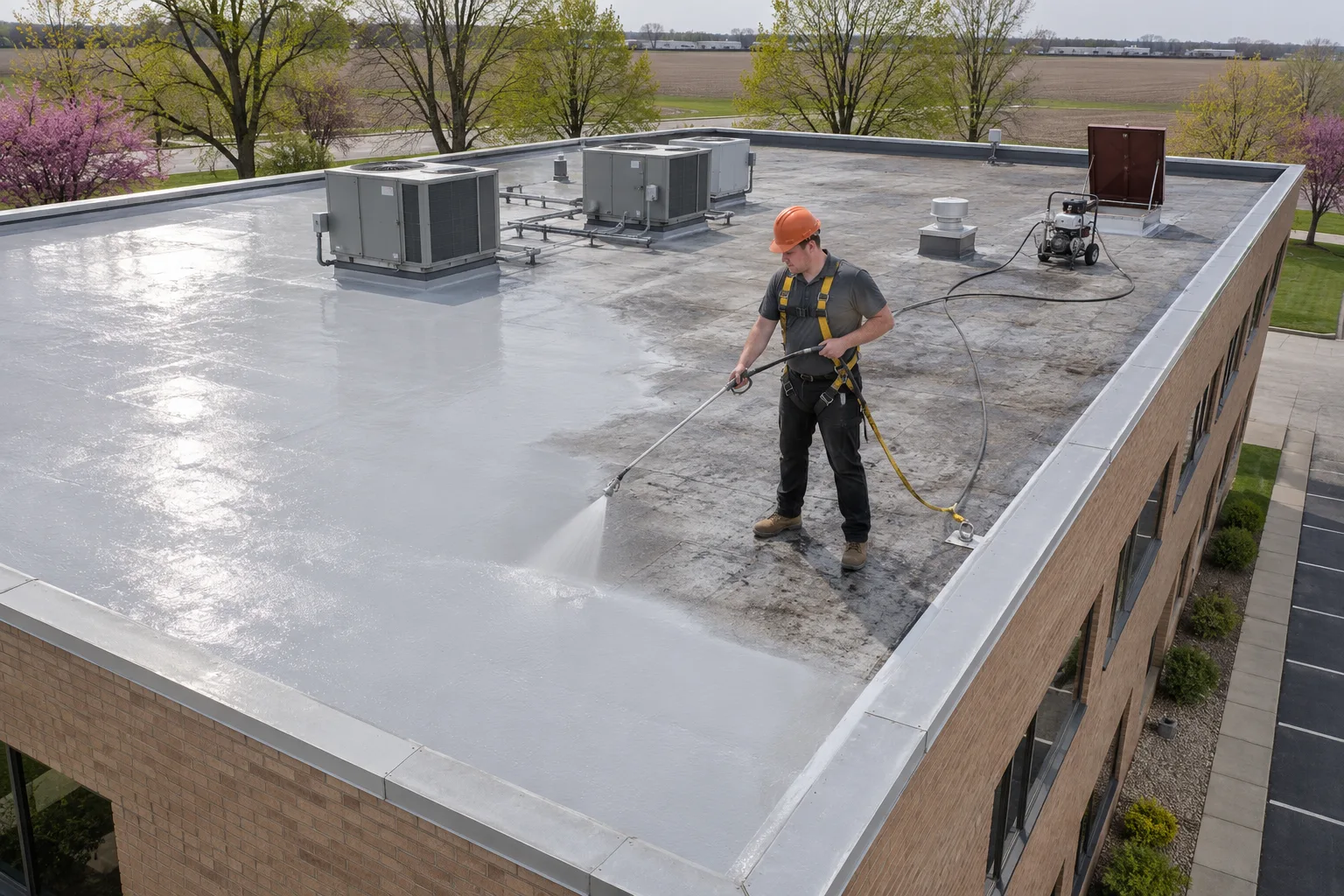
Low valleys and flat additions on a metal building take silicone where water stands after storms.
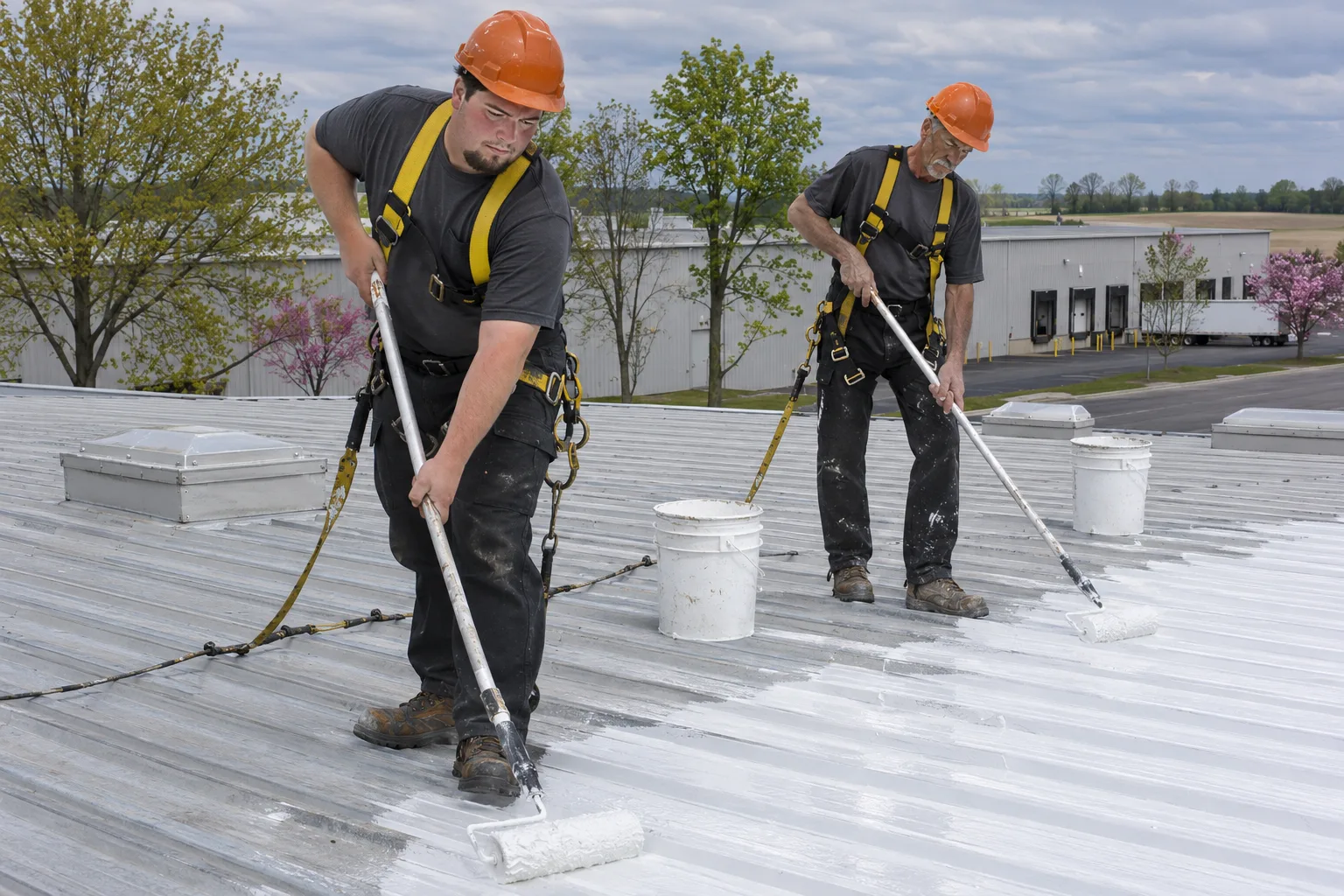
Pitched panel runs that drain quickly take a lower-cost acrylic base and topcoat.
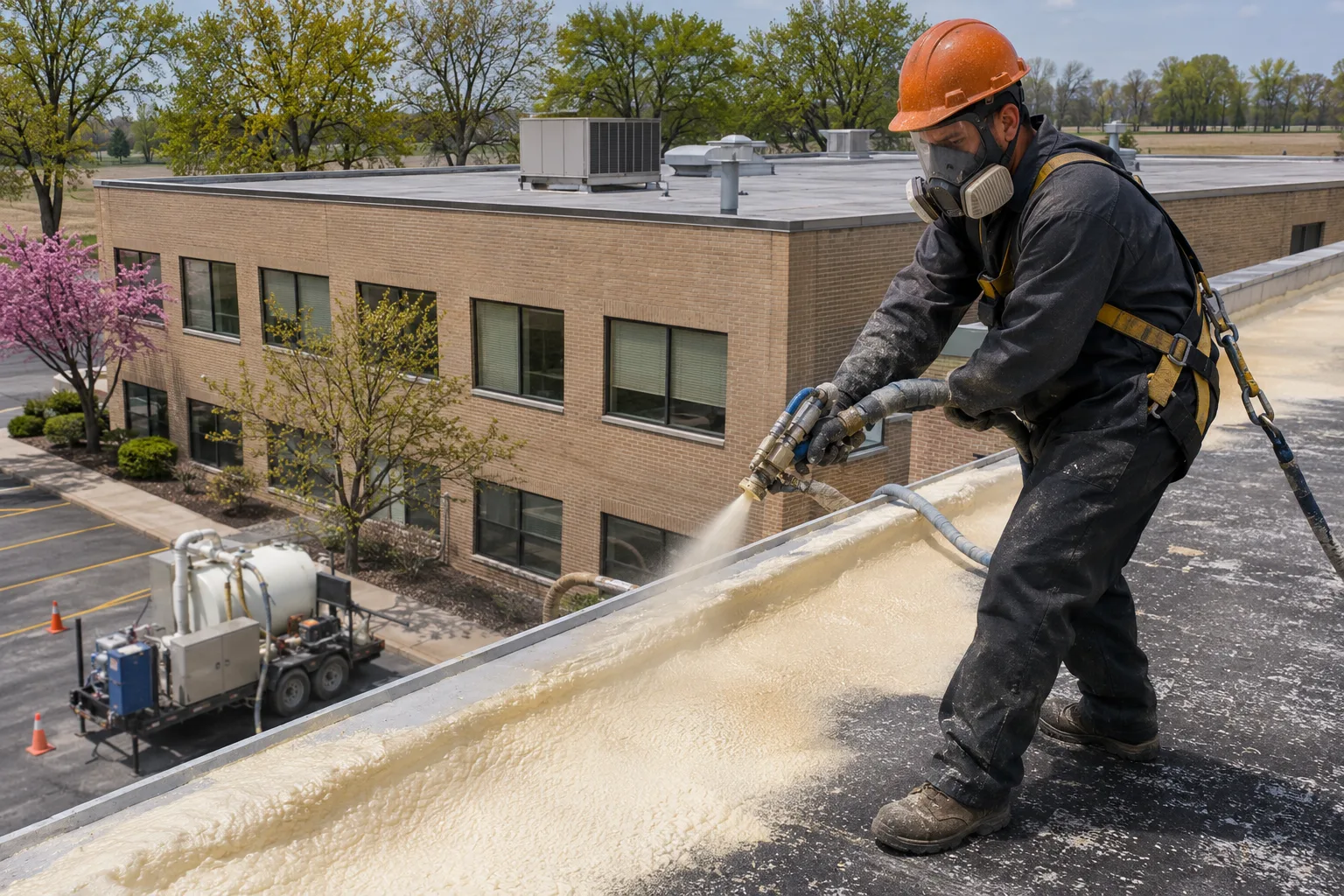
When leaks show at laps all over the roof, foam covers every lap in one layer.
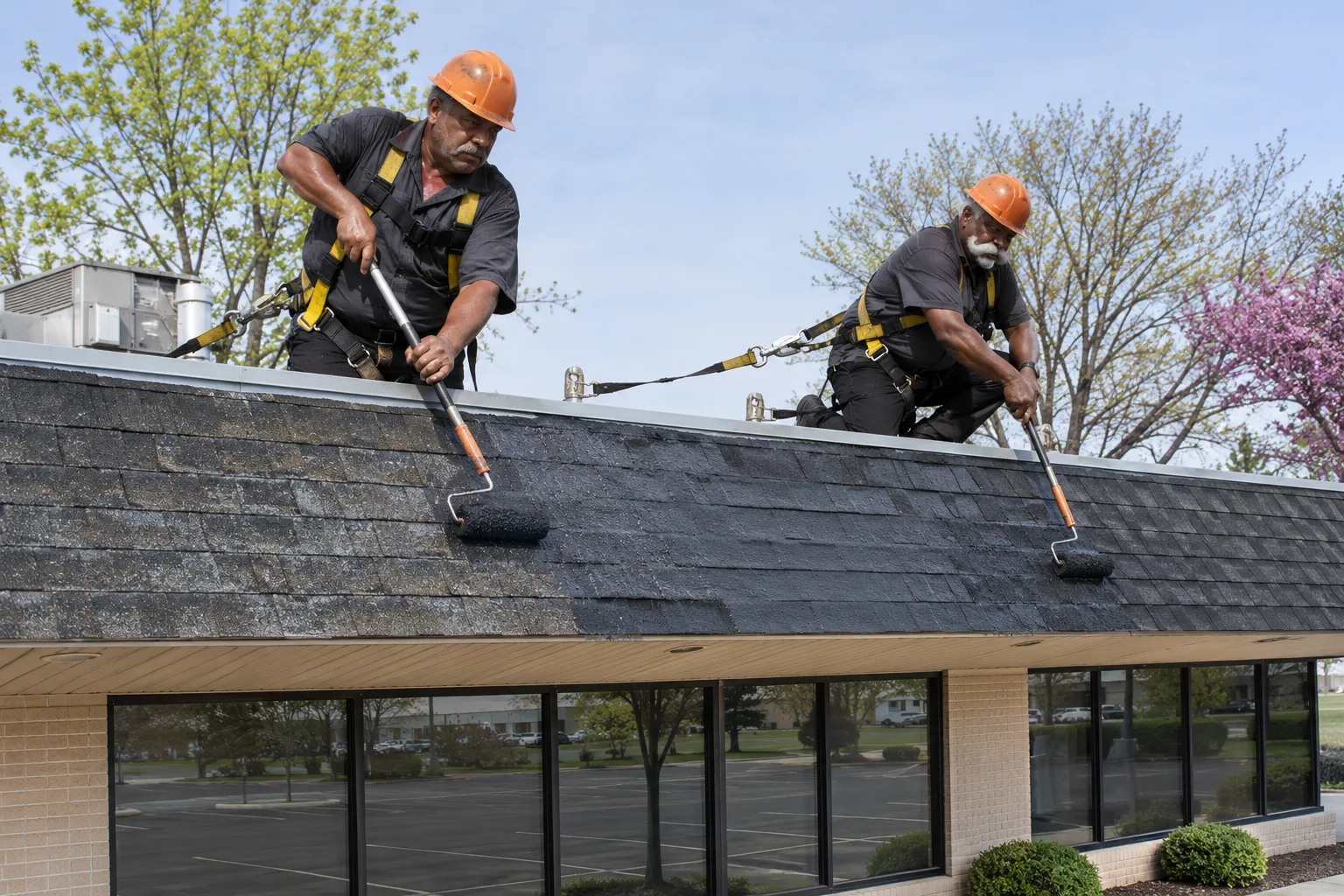
Office wings with asphalt shingles get a breathable shingle coating to match the job.
Questions plant and warehouse owners ask about restoring a metal roof.
It renews the roof without removing it. The panels are washed, rust is treated and primed, failed screws are replaced with larger ones, and laps and penetrations are sealed with fabric and mastic. The coating then goes on to a set thickness while the warehouse keeps running below.
Slope and standing water decide it. Pitched runs that shed water take acrylic, which costs less and reflects heat. Low spots near drains take silicone, which handles ponding. Many distribution roofs get both, split at a primed line after the roof walk.
Thickness and prep matter more than the label. Silicone and high-solids systems at higher mil builds carry the longest published ranges, yet any thick coat over loose screws fails early. We set thickness from the roof condition and the data sheet, then measure it.
Screws are where most metal roofs leak. Washers crack and screws back out as panels move. Replacing stripped screws with oversized ones and capping every head with sealant keeps the coating film from being the only barrier at each hole.
In most cases it can. No panels come off, so work inside goes on. We keep coating away from rooftop air intakes while they run, schedule sections around docks, and agree on access and safety rules with the facility manager first.
Only in mild, dry stretches above the product minimum, with no frost on the panels. Acrylic needs the most warmth, and some silicones allow cooler days. Most jobs run spring through fall, and urgent seam sealing can go ahead in colder weather.
Indiana commercial buildings follow the Indiana Building Code, 675 IAC 13. The state commission lists the 2014 edition, based on the 2012 International Building Code, as in effect, and local departments enforce it. We confirm the current requirements with them before the job.
Tell us the building type and where the leaks show up. We will walk every panel run and price the repairs and coating together.