Owner
- The building stays in use, with no panels pulled.
- Rust above the doors stops spreading once primed.
- A white roof keeps the shop cooler in summer.

As a Huntertown metal roof coating contractor, we coat farm shops, storage buildings, and small commercial metal buildings with exposed-fastener roofs.
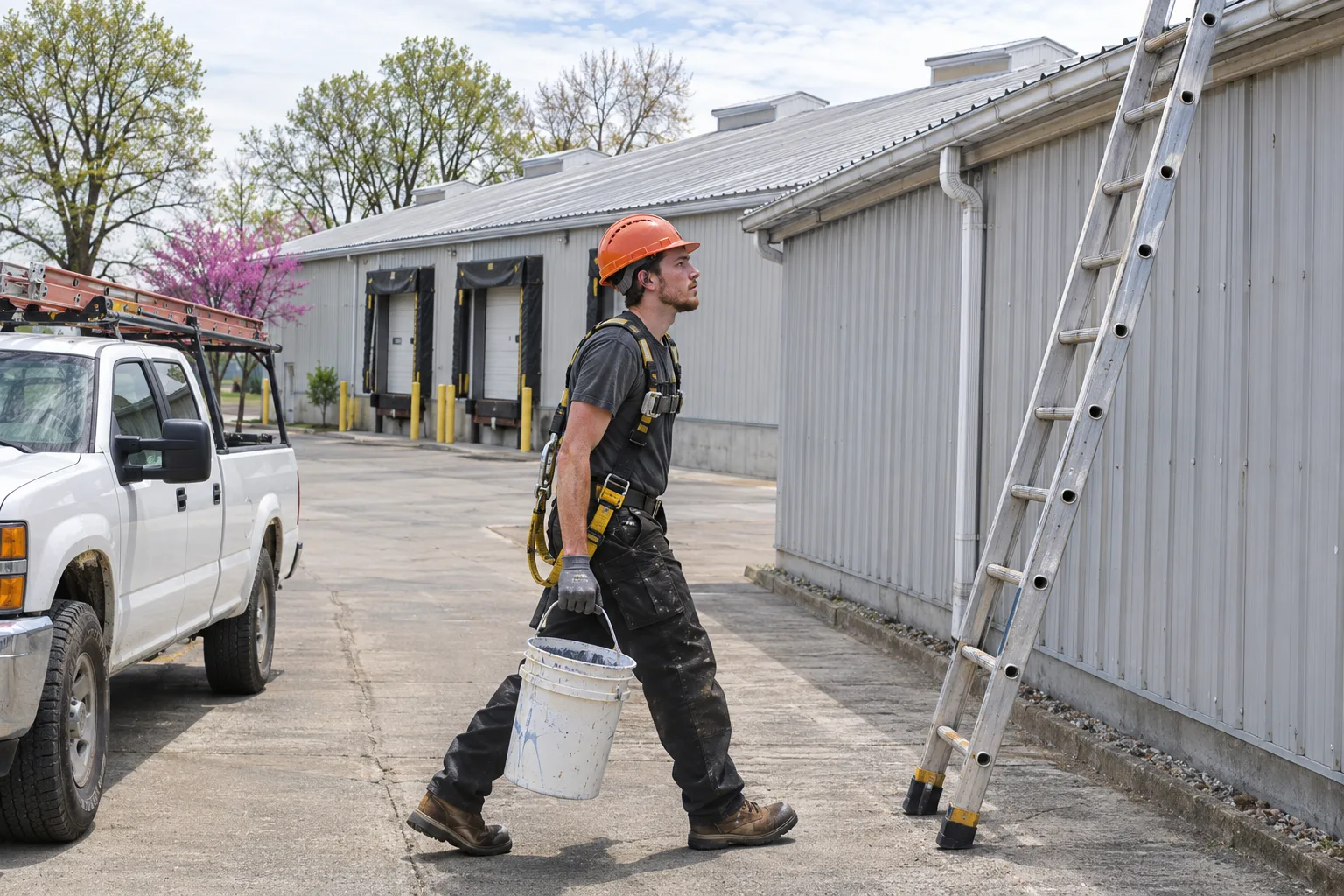
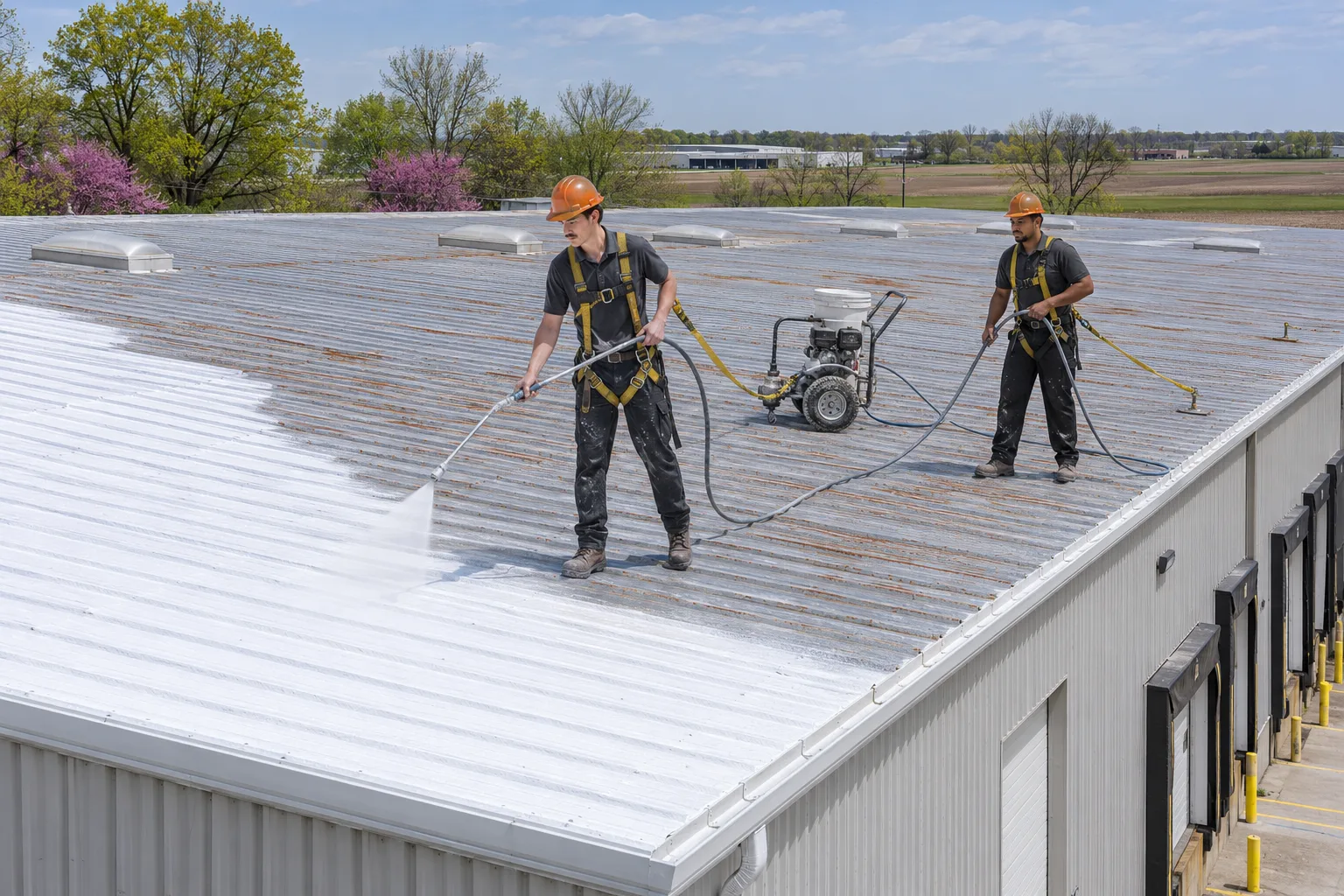
Huntertown metal roof coating work is mostly farm shops and storage buildings, where what sits inside matters as much as the roof.
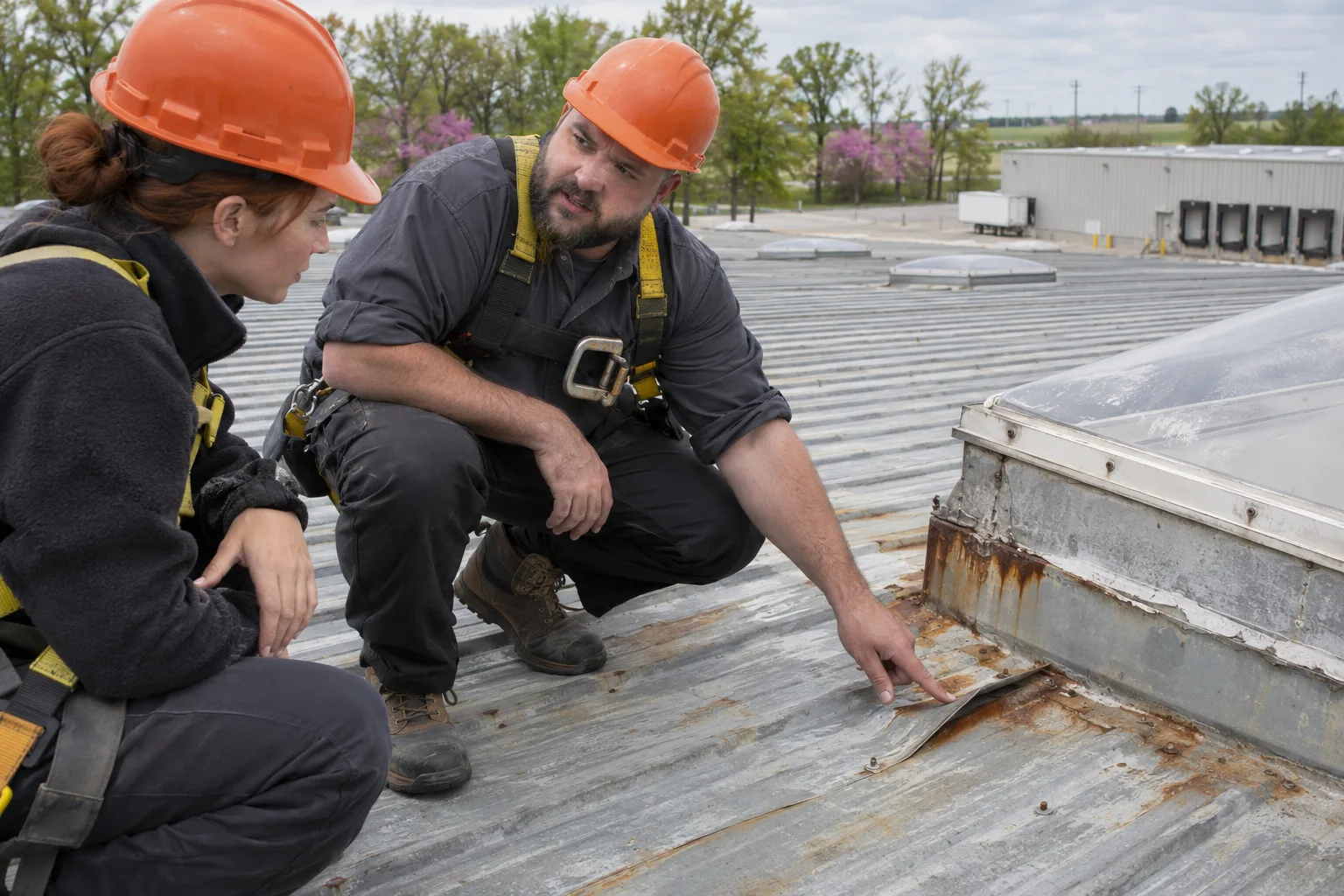
Shops and storage buildings around Huntertown often hold equipment, vehicles, or grain. Before any spraying, doors, eave openings, and vents are covered so overspray stays on the roof and off what is stored inside.
These roofs usually have exposed screws, ridge caps, and trim that have taken years of wind. We replace worn screws and seal the caps and trim before the coating goes on.
These are the problems we see most on farm shops and storage buildings.
Water on the floor after a frosty night is often condensation under uninsulated panels. Ventilation solves it, so we check the eaves first.
Open ground around farm buildings lets wind work on the edges. Caps and trim are re-fastened and closure strips replaced.
Years of sun dry out the washers under each screw. Screws are replaced or resealed before coating.
Panels above large doors take splash and road salt from vehicles. Those panels are brushed and primed first.
Dents on their own rarely leak. We check the screws and laps around them, since that is where hail damage turns into leaks.
Farm and storage owners gain from a coated roof in a few specific ways.
Huntertown buildings can take any of our five systems. These notes show where each one fits a farm or storage property.
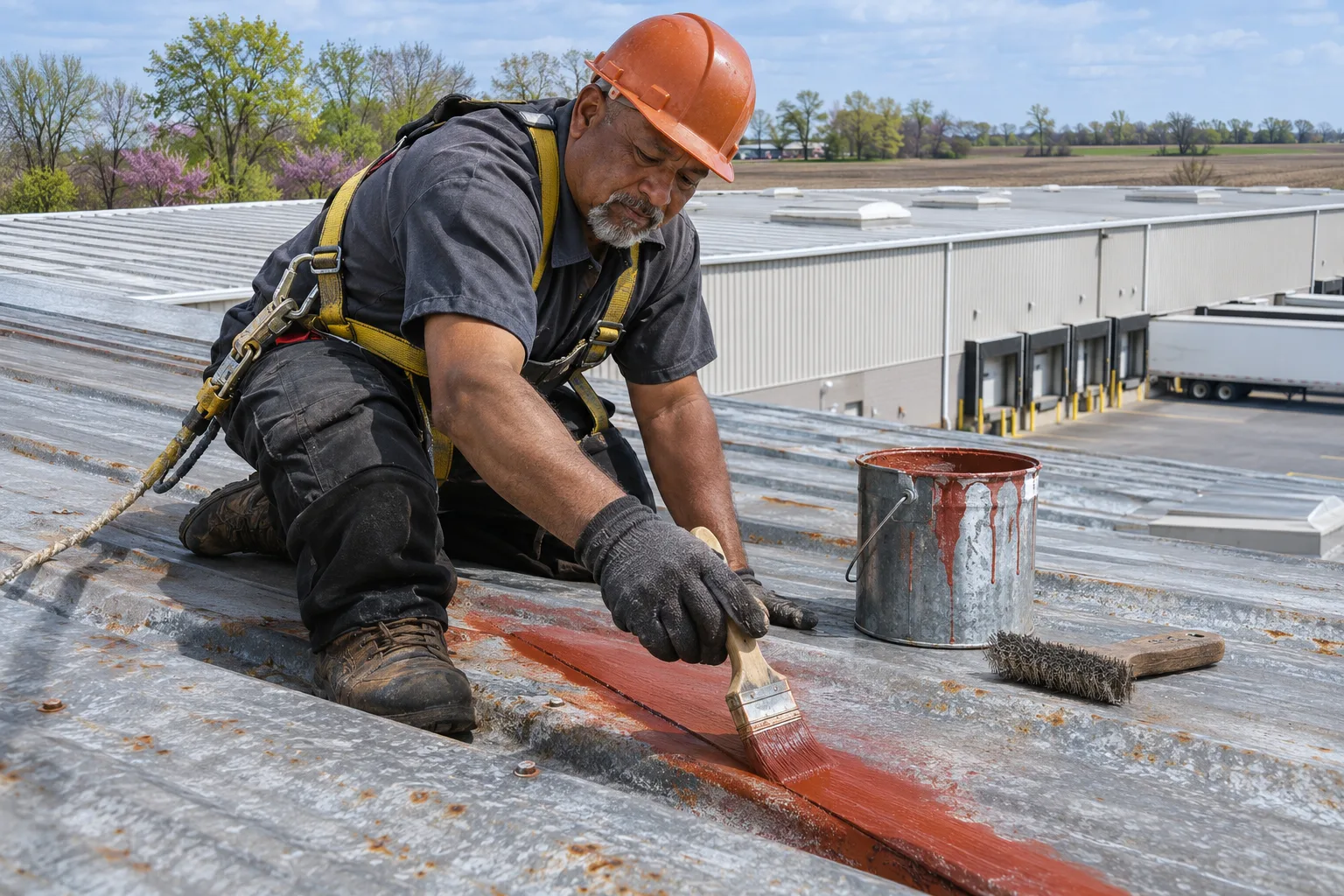
Exposed-fastener farm shops and storage buildings get the full metal system.
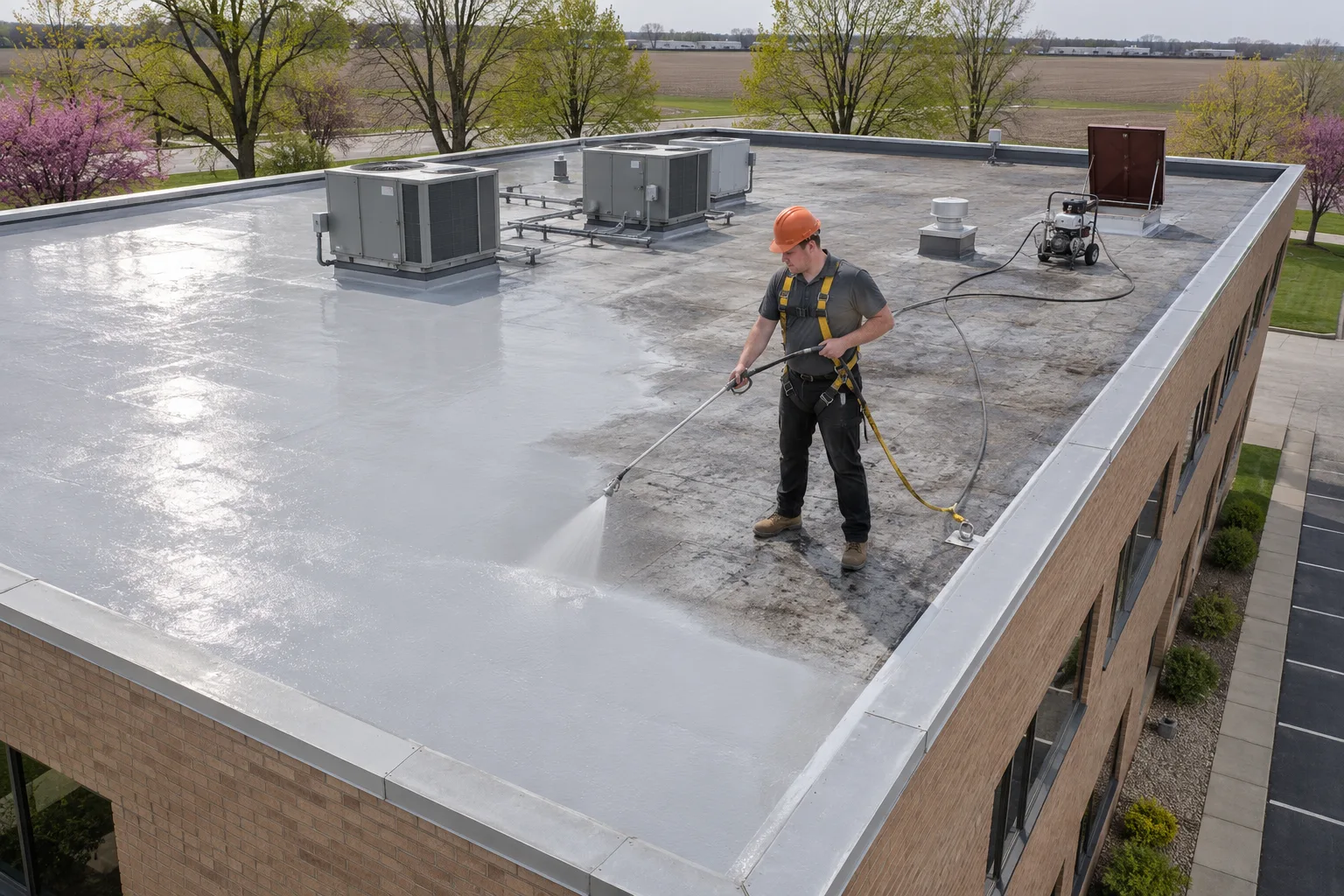
Low-slope lean-tos and flat additions that hold water take silicone.
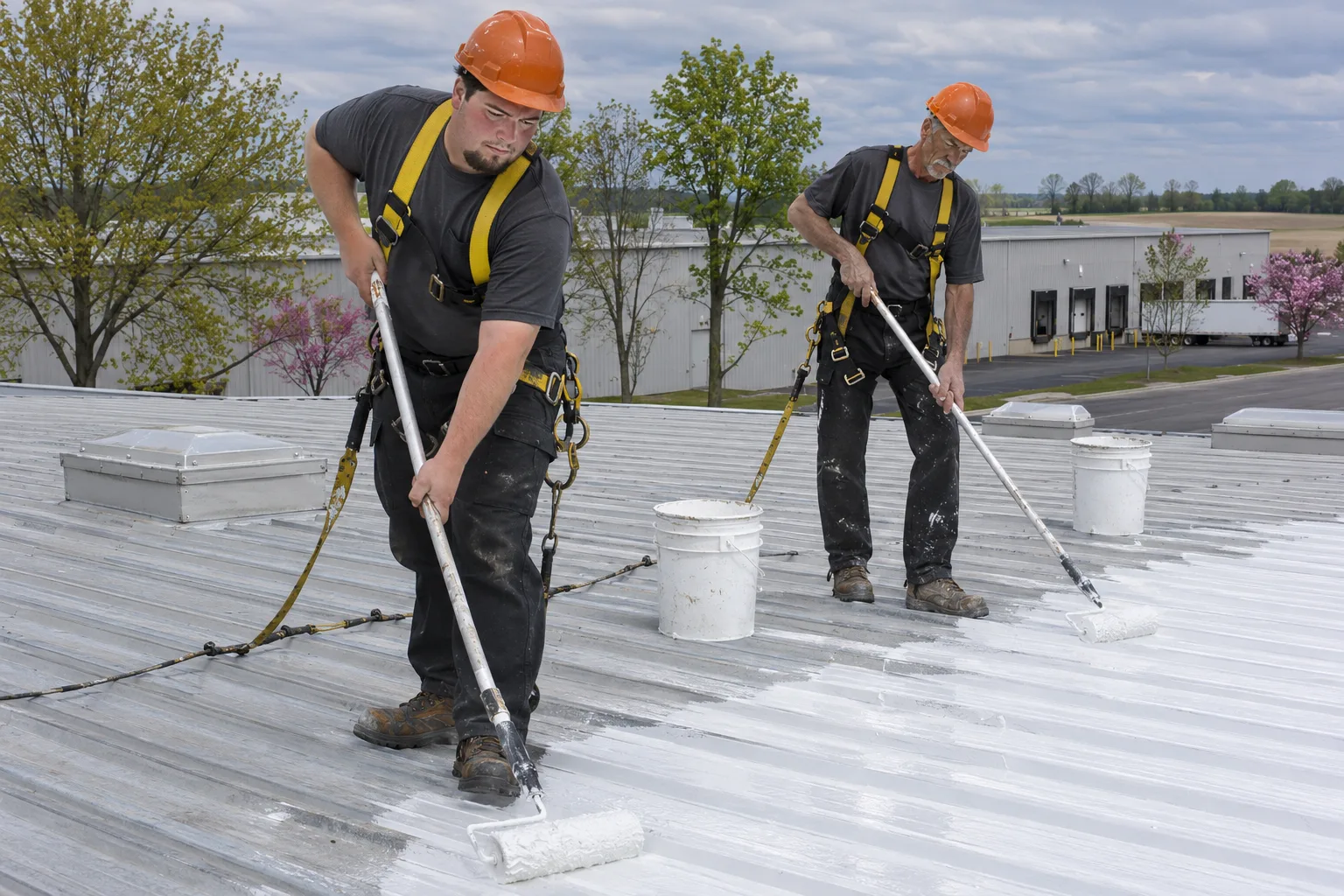
Pitched shop roofs that drain well take acrylic at a lower cost.
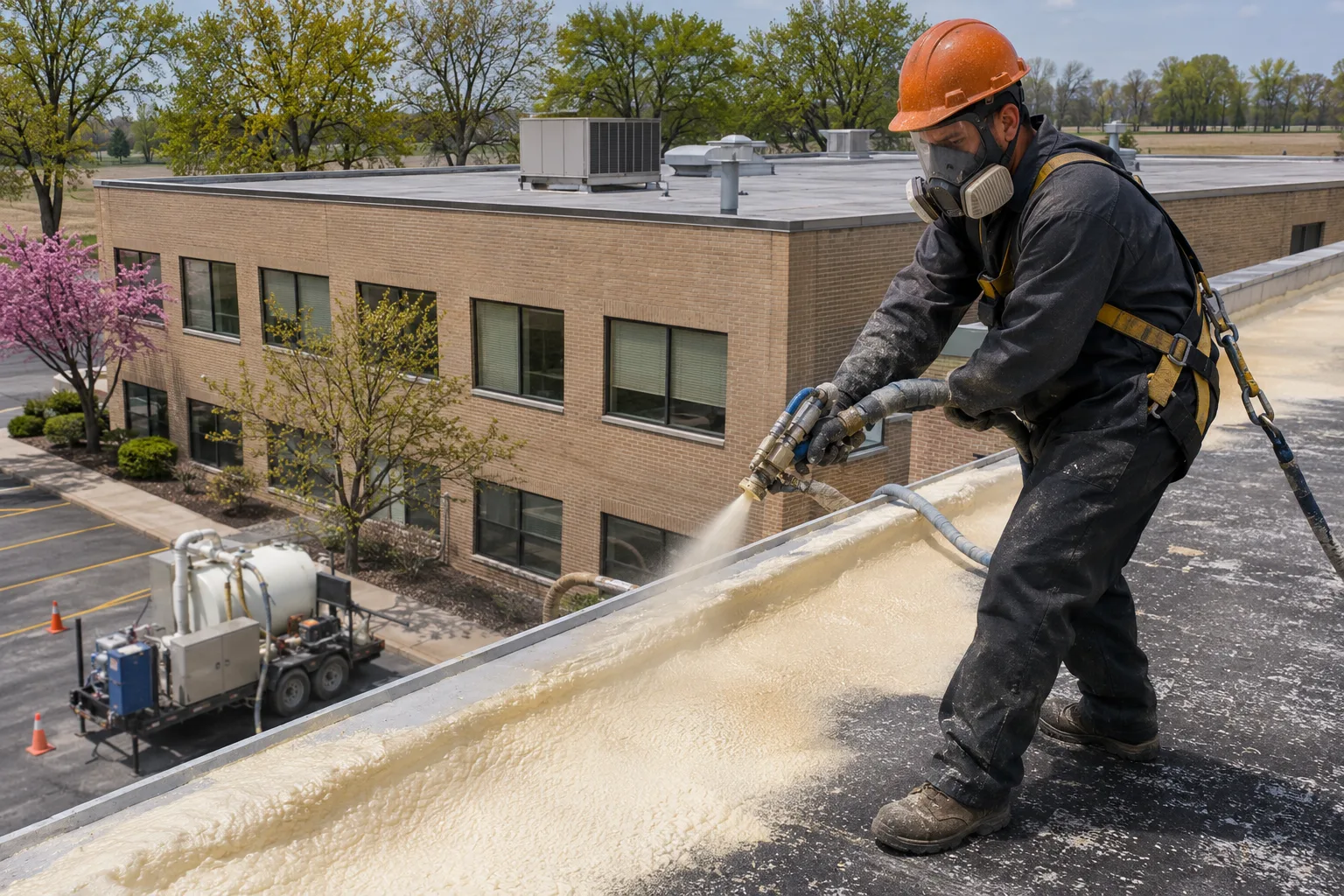
Shops that need more insulation and leak at many laps can take foam.
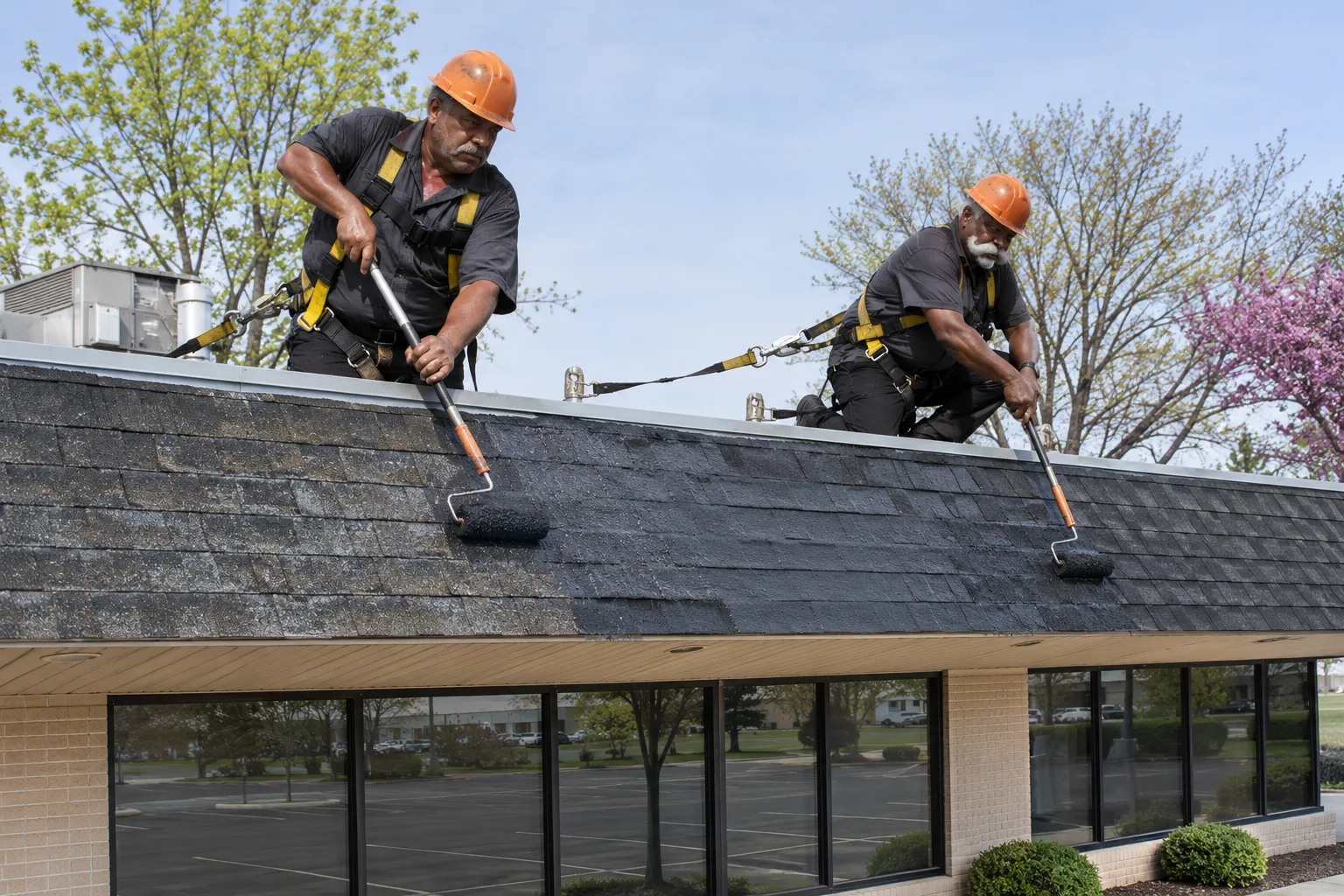
Shingled offices or homesteads converted to business use take a shingle coating.
Call and tell us where the water lands. We will check the screws and ridge caps above it and look at condensation too.
(260) 620-8962Farm buildings get one extra step: protecting what is inside.
We walk the roof, count worn screws, check ridge caps and trim, and look inside for condensation marks and open eaves.
Doors, eave openings, vents, and anything stored near them are covered so overspray stays on the roof.
Worn screws are replaced, ridge caps and trim re-fastened, and rusted panels above doors brushed and primed.
The coating goes on to the planned thickness, thickness is logged, and covers come off once the coating is dry.
These towns are also in our area. For other locations, call us or send us a message.
What farm and storage owners ask before a roof walk.
It can, and these are common projects for us. We clean the panels, treat rust, replace worn screws, and seal ridge caps and trim before coating. Doors and vents are covered during spraying so overspray stays off equipment and stored grain.
Our coating range is about $2.50 to $4.00 per square foot, against about $5 to $8 to replace the roof. Screw replacement, ridge cap work, rust treatment, and how much needs covering inside change the final price.
We work out of Fort Wayne, a short drive south, and schedule Huntertown roof walks around your season. Call with the address and the building size.
Yes. Small commercial metal buildings, contractor shops, and storage rentals in Huntertown get the same repairs and coating systems as farm shops.
Drips from bare panels on cold mornings are usually condensation from warm, moist air inside. Venting the eaves or adding insulation fixes that, and we check for it before quoting any coating.
Our work covers the metal roofs of farm shops, equipment sheds, and storage buildings. Grain bins and silos are a different kind of structure with their own coatings, so we leave those to specialists.
Loose caps are re-fastened into the purlins with new screws, the foam closures under them are replaced, and the cap laps get fabric and a base coat before the field coating.
Tell us the building size and what is stored inside. We will check the screws and edges and price the coating.