Commercial Metal Roof Coating
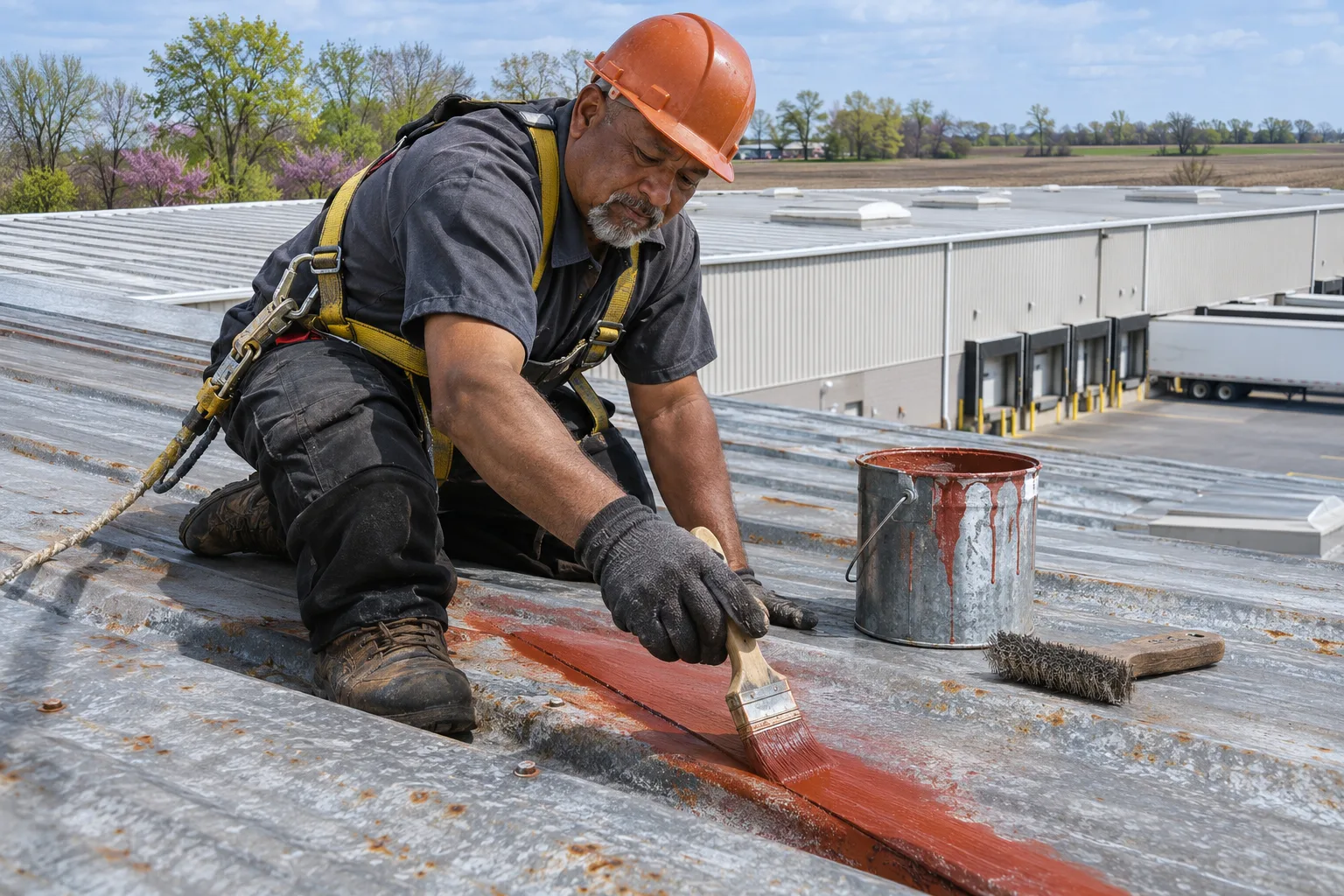
Exposed-fastener and R-panel roofs on plants and warehouses get sealed laps, primed rust, and a reinforced coating over the whole panel field.

Our metal roof coating services in Fort Wayne cover five systems for plants, warehouses, offices, churches, and farm shops. The roof walk decides which one goes on.
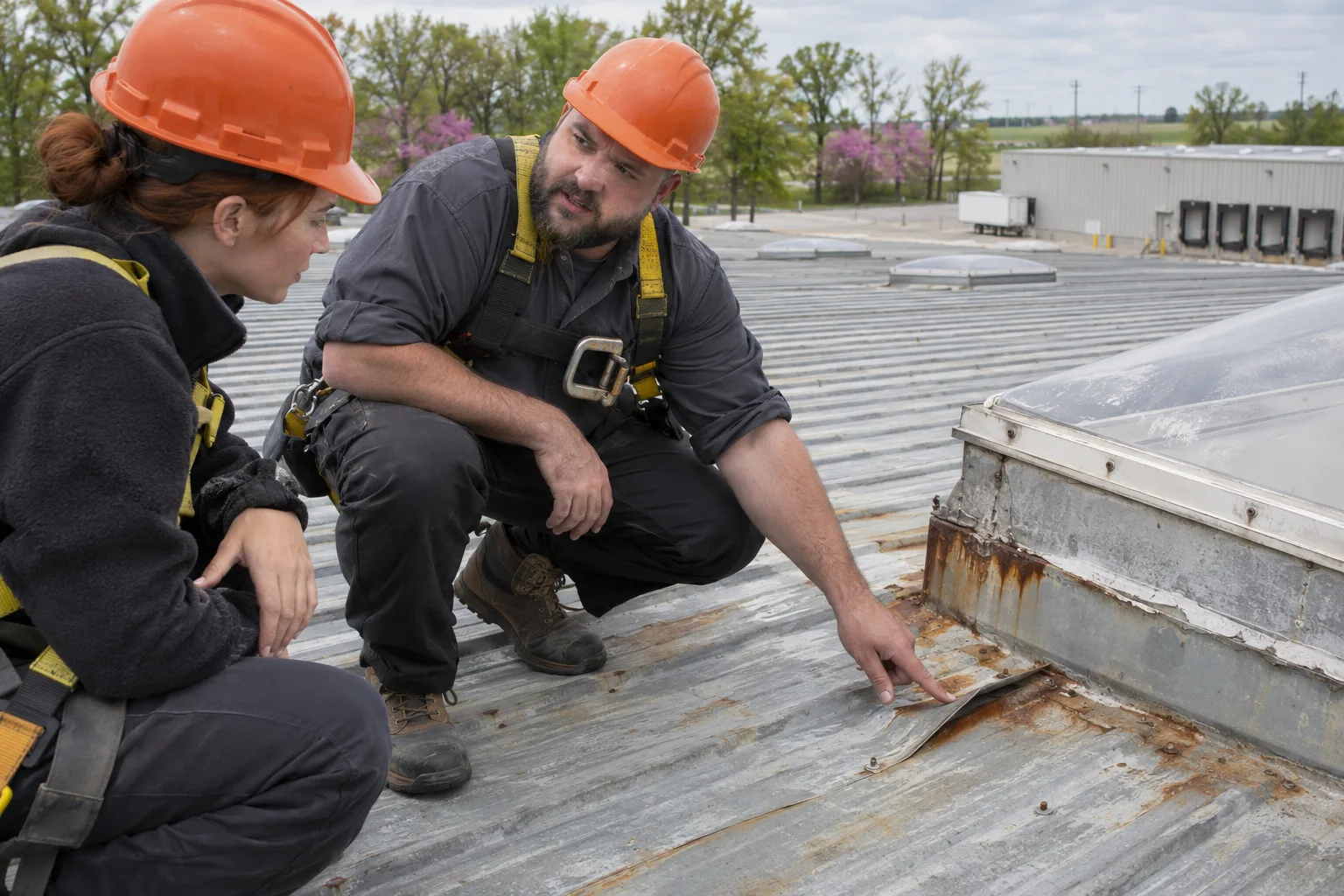
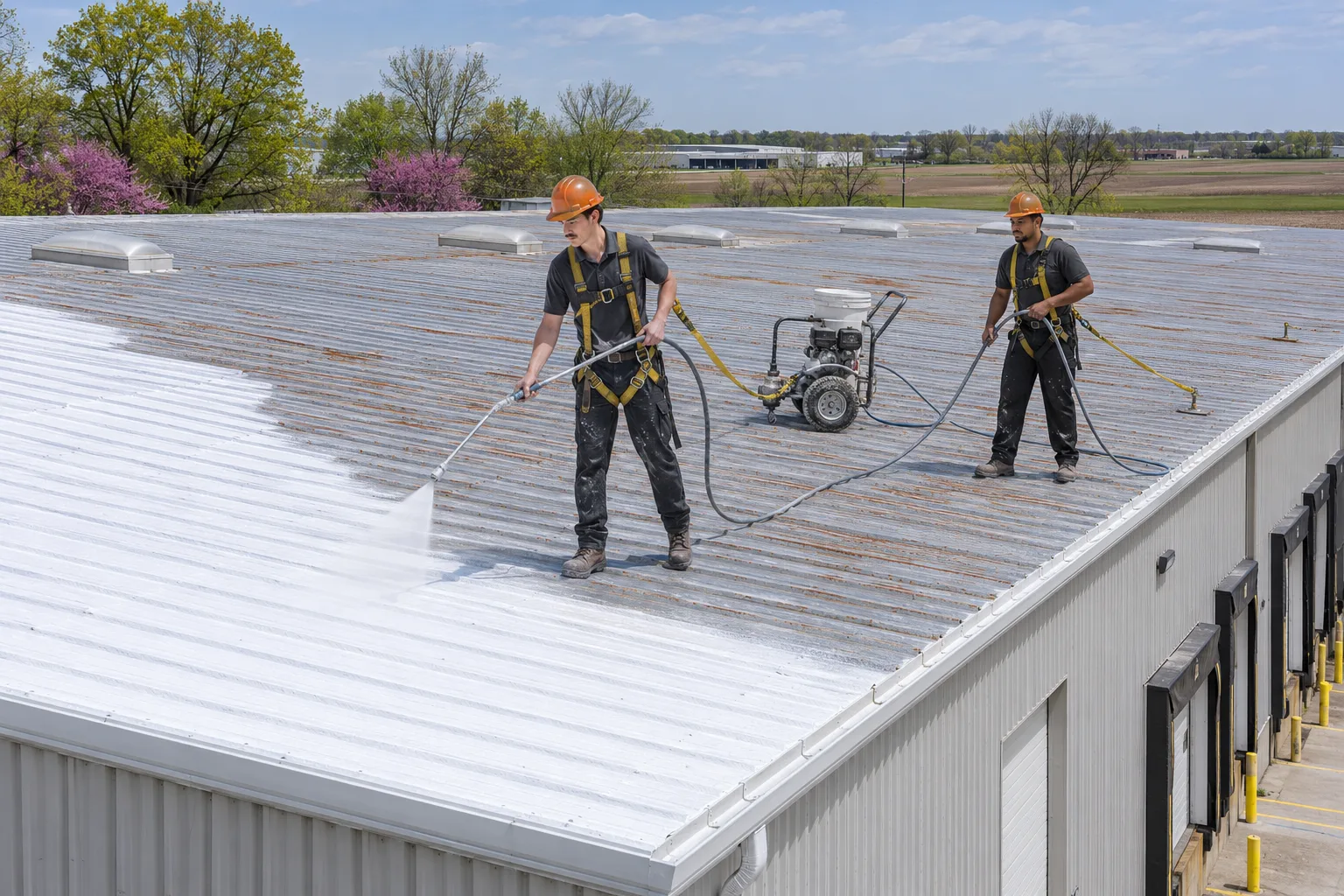
Every one of our metal roof coating services in Fort Wayne starts with repairs to laps, screws, and curbs. These cards show where each system earns its place.
Exposed-fastener and R-panel roofs on plants and warehouses get sealed laps, primed rust, and a reinforced coating over the whole panel field.
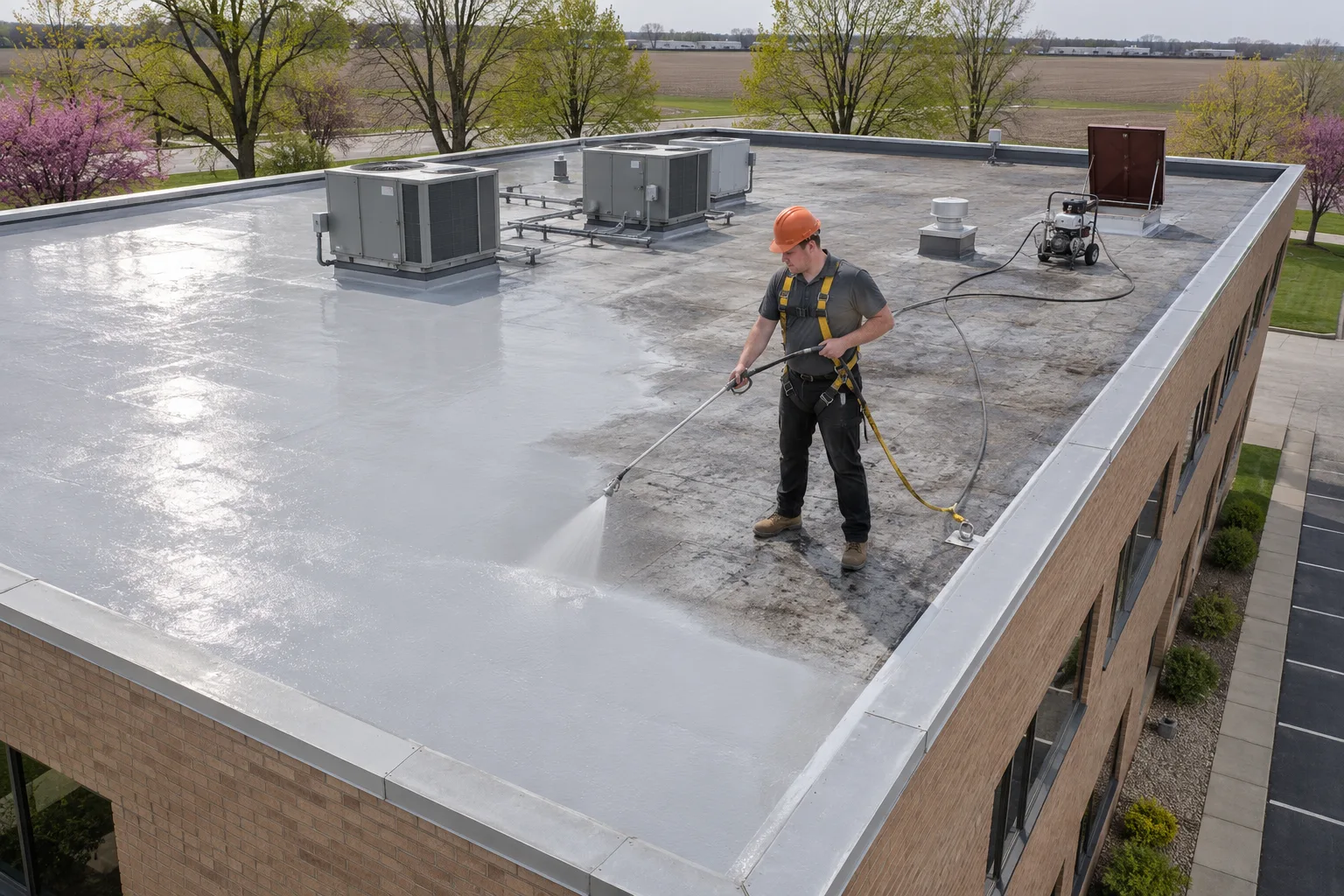
Low-slope sections and flat additions that hold water after storms take silicone, which keeps its grip on the roof under standing water.
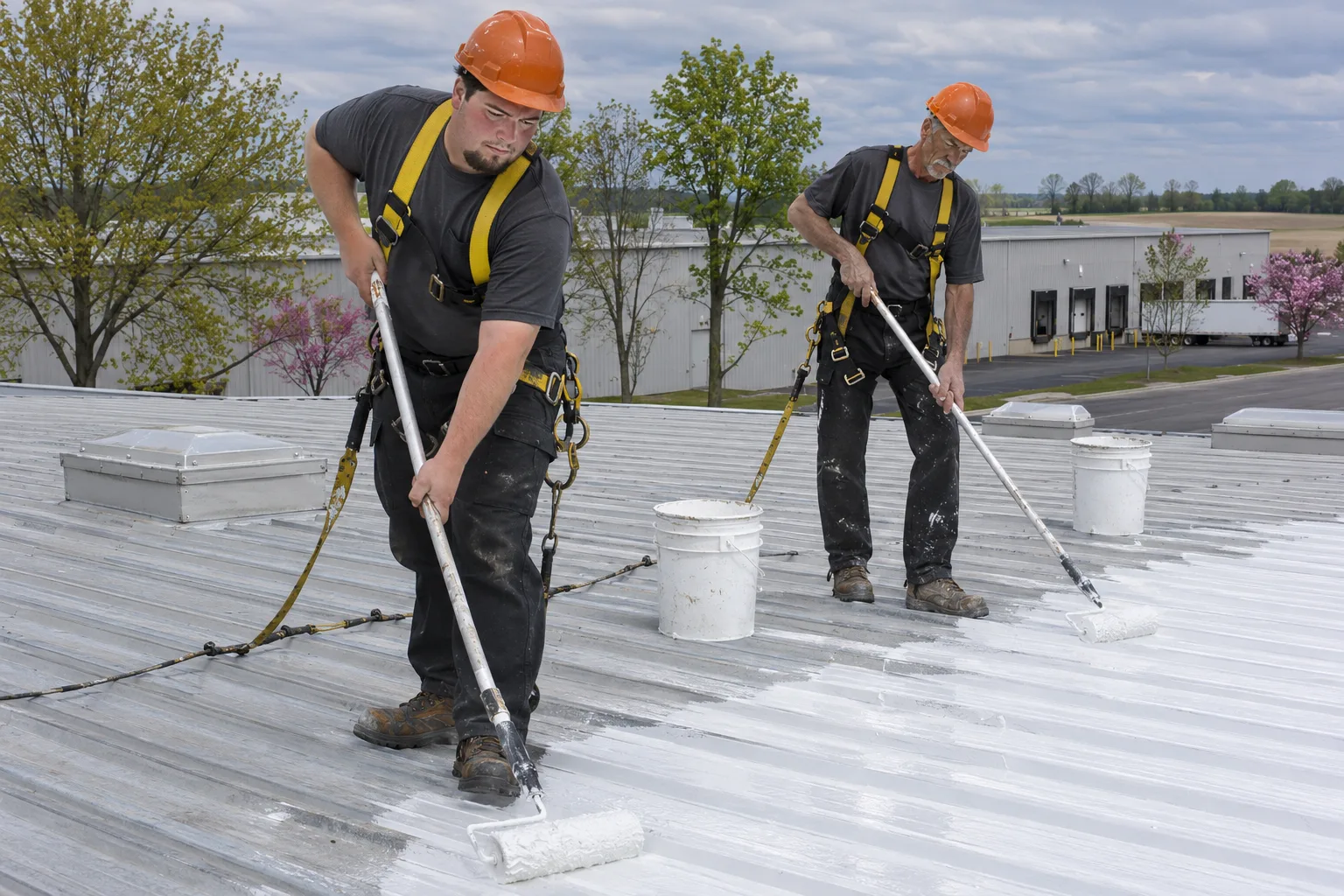
Pitched metal roofs that drain fast get a water-based acrylic base and topcoat, applied on dry days between April and October.
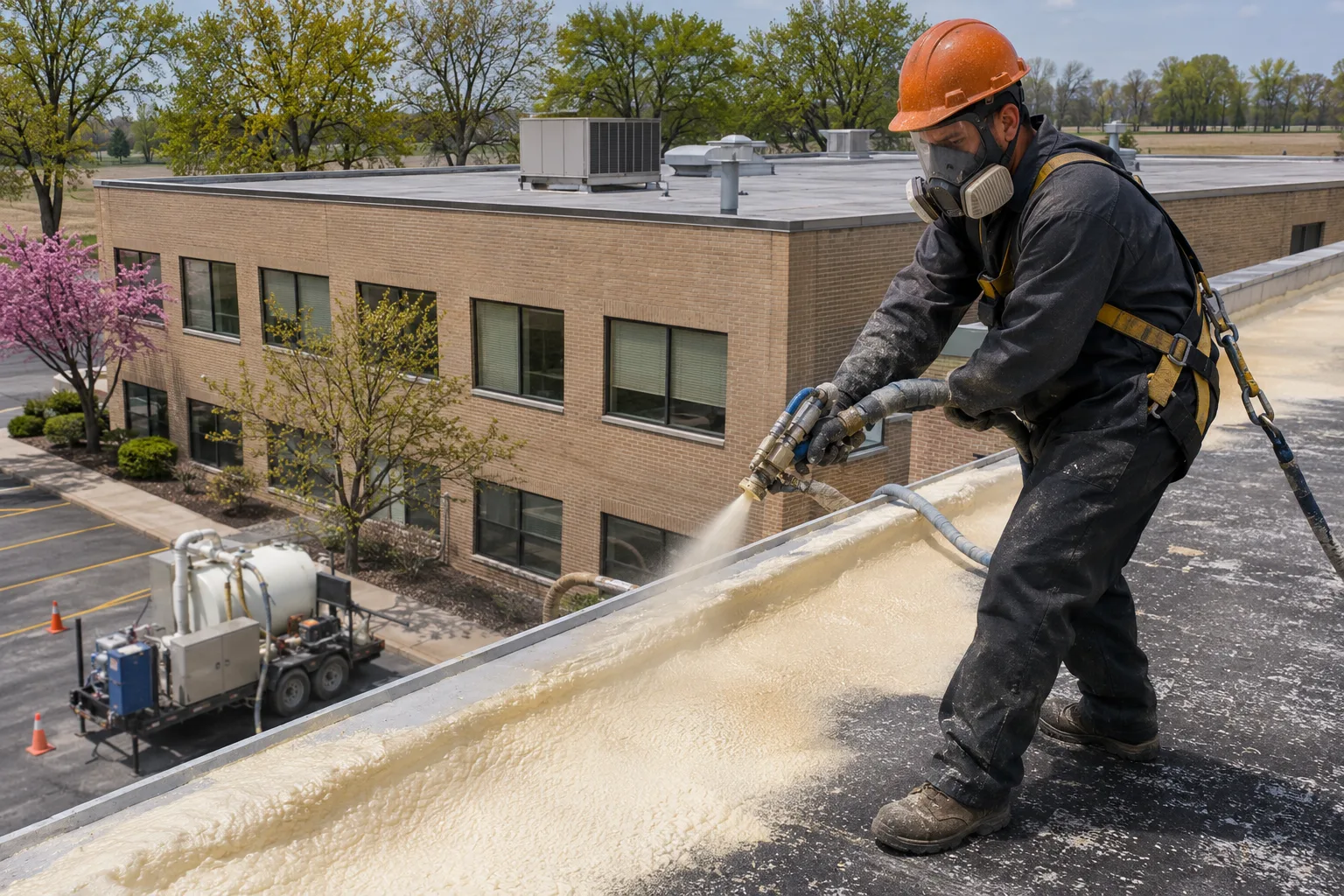
Roofs leaking at many laps get foam sprayed into the ribs for one continuous insulated layer, then a protective topcoat.
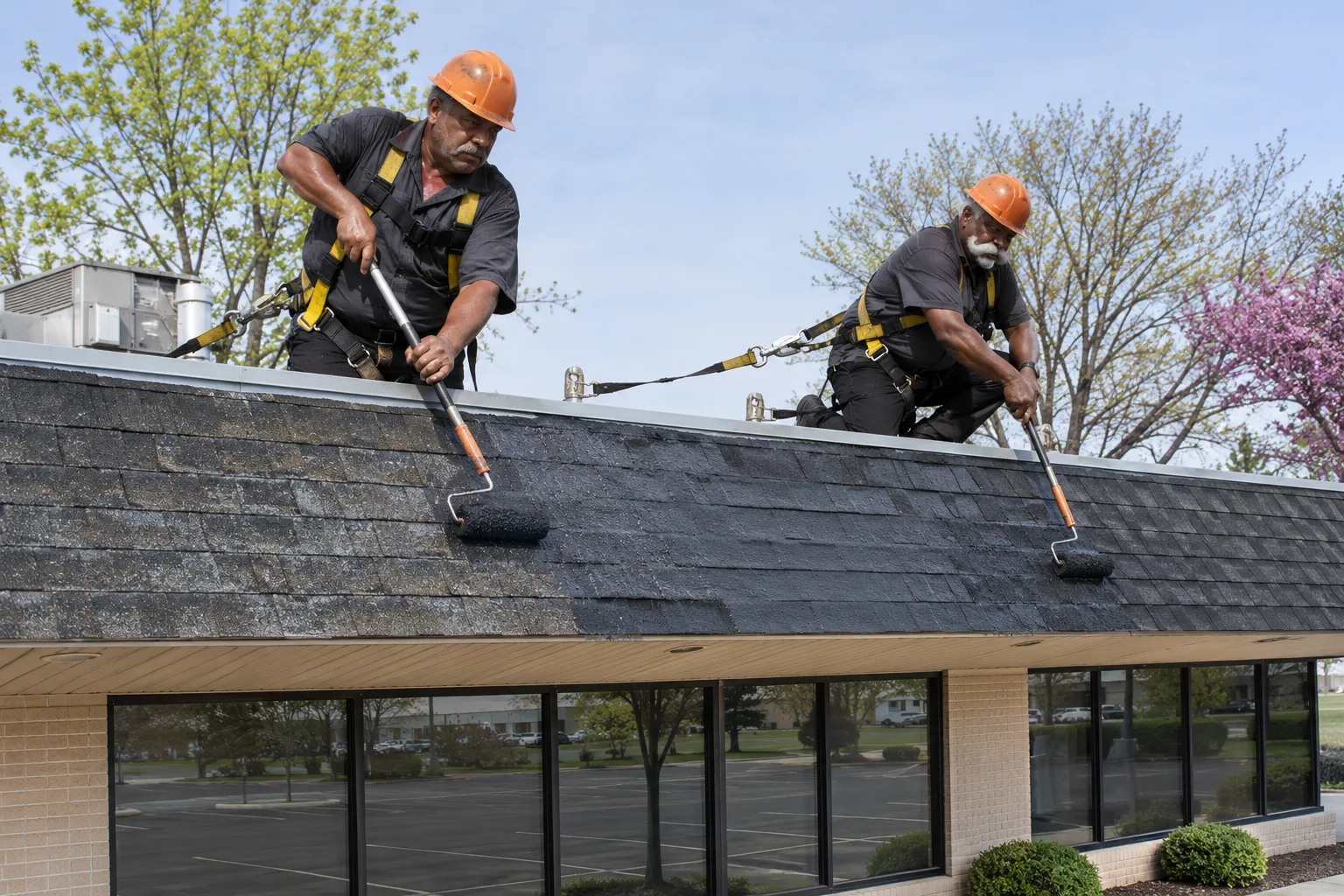
Asphalt shingle roofs on offices and churches take a breathable shingle coating while the tabs still lie flat on a firm deck.
Use this table to match the roof you have to a system. The roof walk confirms it with moisture readings and a look at every lap.
| System | Best Roof | Water On The Roof | Recoat Path | Watch For |
|---|---|---|---|---|
| Commercial metal | Exposed-fastener panels, R-panel, standing seam | Sheds water on pitch | Same system over a clean, primed surface | Holes rusted through |
| Silicone | Low-slope metal, single-ply, foam | Holds up to ponding | Silicone only | Dirt pickup on white topcoats |
| Acrylic | Pitched metal with good runoff | Must drain within a day | Acrylic or silicone | Rain or dew on fresh coats |
| Spray foam | Flat and low-slope roofs, metal panels | Foam can build slope to drains | New topcoat over cleaned foam | Overspray near cars and intakes |
| Shingle | Asphalt shingles on a firm deck | Sheds water on pitch | Shingle coating per the maker | Curled or missing tabs |
Call and describe how far the rust runs. We will look at whether the steel is still firm and which system the panels can take.
(260) 620-8962Each system follows the same five steps. Only the products and thickness change.
A roofer walks every section, probes soft spots, and reads moisture at laps and drains. Photos of each problem come back to you with the system we recommend.
Screws, laps, curb flashing, and gutters are repaired first, because a coating over an open seam fails at that seam.
Washing removes chalk, dirt, and oil from exhaust vents. Rusted spots are brushed and primed for metal systems.
Seams, screw rows, and penetrations get fabric and a base coat. Foam roofs get their foam passes at this stage.
The topcoat goes on at the data-sheet rate, and thickness readings are logged across the roof before we leave.
The questions owners ask when they compare systems for one roof.
Start with slope and drainage. Pitched metal roofs that drain fast suit acrylic or the commercial metal system; flat or low areas that hold water suit silicone; roofs leaking at many laps at once suit foam. Shingle roofs take a shingle coating. The roof walk confirms the pick.
Yes. A common Fort Wayne plan puts silicone in the low valleys and around drains and acrylic on the pitched panel runs. The two meet at a clean, primed line, and each area gets the product that matches how water behaves there.
Every metal roof does. Loose scale is brushed off and bare steel is primed before any metal coating goes down, because the coating bonds to what is under it. Foam over metal also needs clean, primed panels.
Service life depends on dry film thickness. Crews take wet-film readings while spraying or rolling and adjust passes until each area meets the data sheet. Those readings go into the job record with the photos.
On a pitched roof that sheds water within hours, acrylic usually wins on price and later recoats. Silicone earns the higher cost where water lingers, such as long panel runs feeding a single gutter or valleys between building additions.
Only after the loose material comes off. Peeling coating is scraped and washed back to a firm edge, adhesion is tested on the old layer, and a primer matched to it goes down before the new system.
Acrylic usually carries the lowest material cost on pitched metal roofs, with silicone and foam higher. Repairs drive the total as much as the product, so two roofs of the same size can price very differently.
Yes. Each roof gets its own system and its own line in the estimate. Crews coat the metal warehouse and the shingled office wing in the order that best fits your schedule.
A yearly walk is enough for most roofs. Crews look for scuffs near rooftop units, hail marks, and clogged gutters, and small touch-ups keep the coating whole between recoats.
Units stay in place. Their curbs are flashed and coated, intakes are shielded or paused while nearby areas are sprayed, and service paths can get walk pads so technicians do not wear through the coating.
Send the building address and what you see on the roof. We will match the system after a walk of every lap and screw row.