Owner
- Lower cost per gallon than silicone on pitched runs.
- Later recoats go over the old acrylic after a wash.
- Primed rust stops spreading under the paint.

As a Fort Wayne acrylic roof coating contractor, we roll and spray water-based acrylic over primed metal roofs that shed water quickly on shops and warehouses.
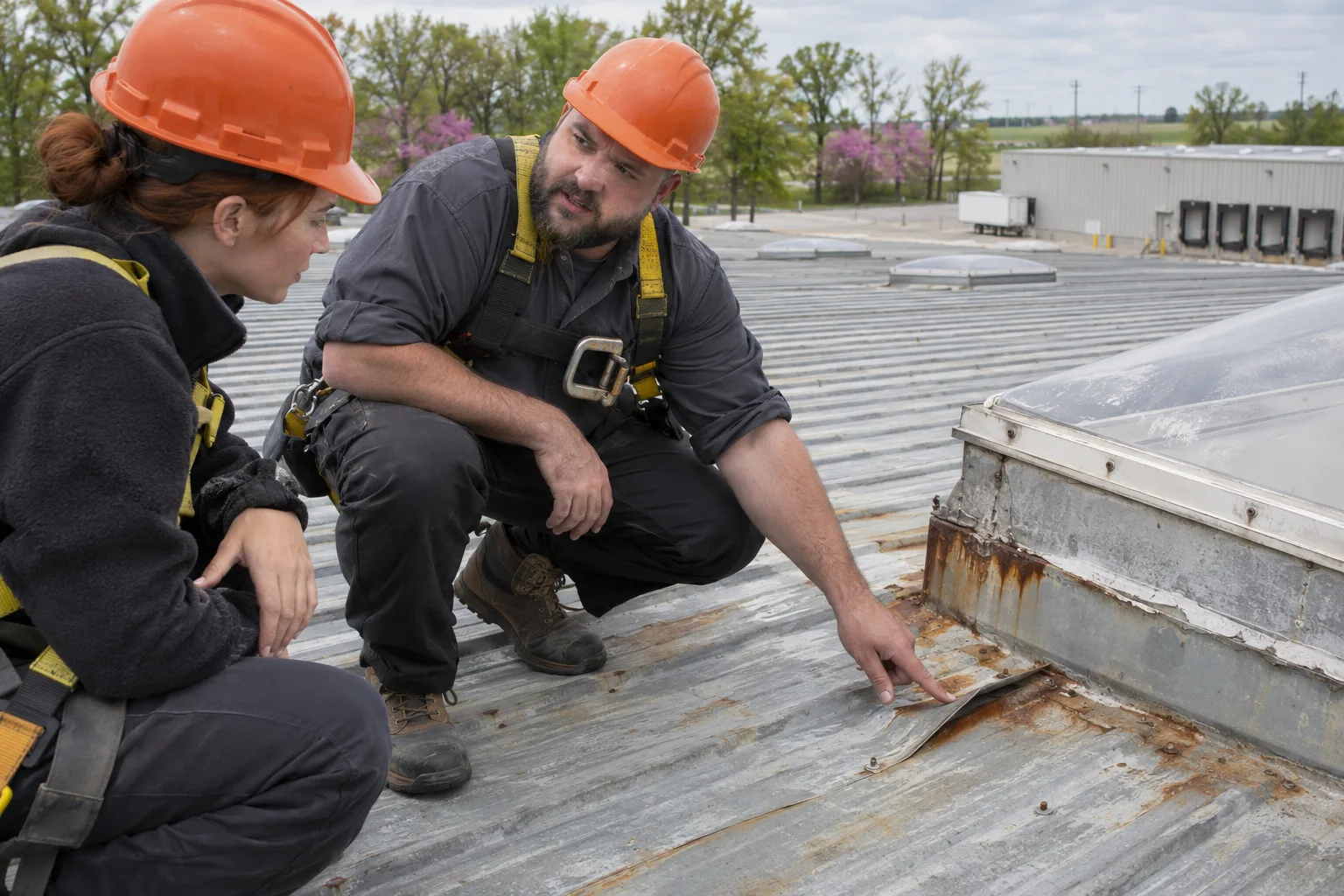
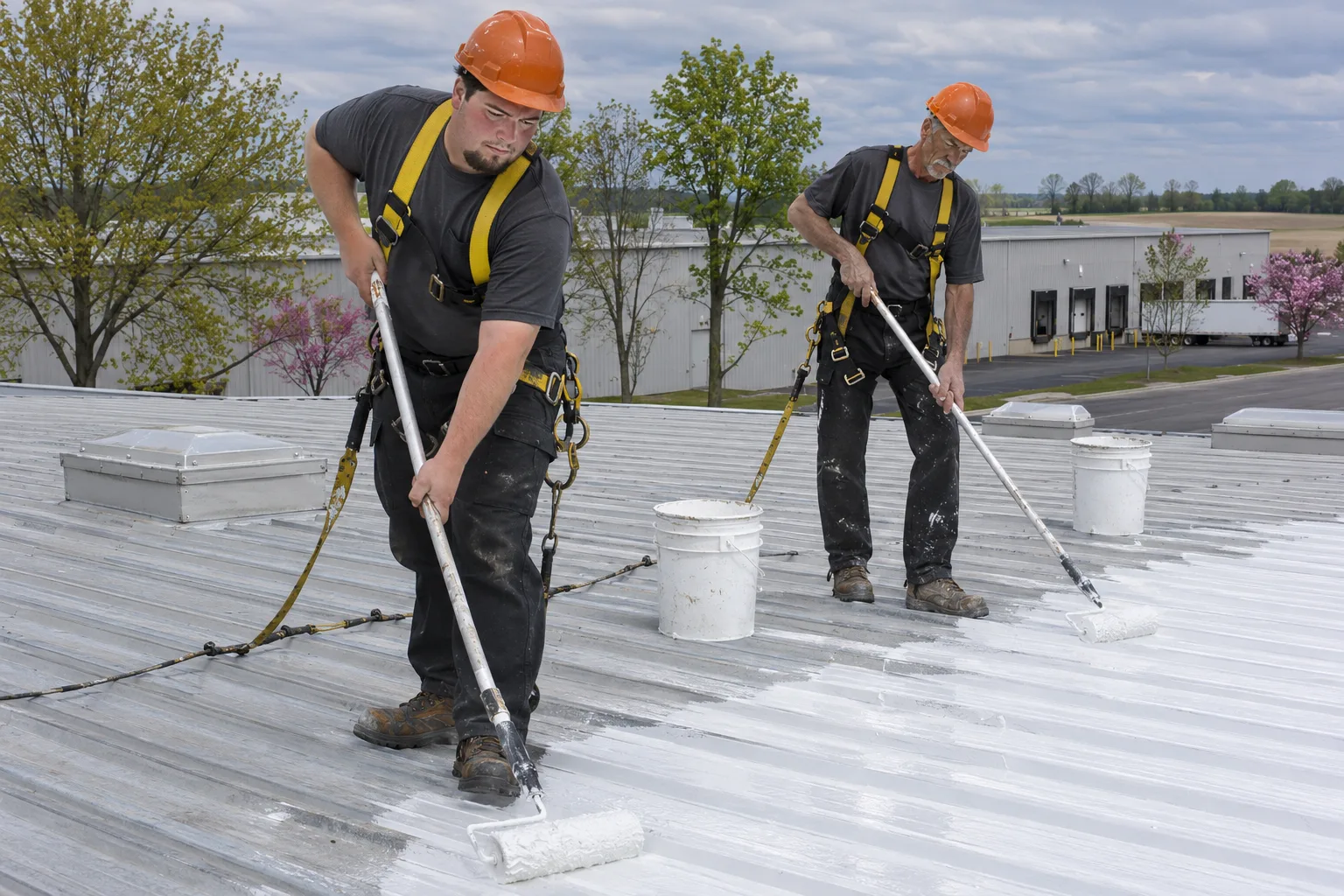
Fort Wayne acrylic roof coating suits roofs where rain runs off within hours. Check your roof against both lists.
These are the conditions we look for before acrylic goes on. Each chip shows how soon it needs work.
Small rust spots across a whole slope mean the paint has worn thin. They are brushed, washed, and spot-primed before any acrylic base.
Side laps near the eave flex the most. Stitch screws pull them tight, and fabric bridges each lap in the base coat.
Dents alone rarely leak. Cracked sealant and bent screws near the dents do, so those are fixed and the roof documented.
Drips below a skylight curb mean the flashing has failed. That curb is rebuilt and the wet insulation replaced first.
Acrylic softens under standing water. Low gutter valleys get silicone, or a gutter fix, while acrylic covers the pitch.
Primer showing through an old acrylic coat tells us the roof is ready for a recoat over a clean surface.
Acrylic fits four kinds of jobs on Fort Wayne roofs. The roof walk picks the plan and the color of each coat.
| Plan | Roof Type | Coats | Watch Out For |
|---|---|---|---|
| Full Acrylic System | Pitched metal panels | Primer, base coat, contrasting topcoat | Rain or heavy dew before it cures |
| Acrylic With Silicone Valleys | Pitched roof with low gutter valleys | Acrylic on the pitch, silicone in valleys | Clean transition line between them |
| Acrylic Recoat | Older acrylic roof | Wash, spot-prime, one or two coats | Chalk left on the old surface |
| Hail Repair And Coat | Dented but sealed panels | Detail repairs, then the full system | Cracked sealant at screws |
Acrylic delivers the most where the roof sheds water and the budget matters.
Call and tell us how much of the roof is speckled. We will check whether the steel is firm enough for acrylic.
(260) 620-8962Acrylic is all about dry days and clean steel. Here is the order we follow.
We check the slope and how fast water leaves it, test the old finish for adhesion, and photograph rust, laps, and curbs.
Loose screws are replaced, side laps get stitch screws, and failed curb flashing is rebuilt before any coating starts.
The roof is washed and left to dry. Every rust spot is brushed and covered with a rust-inhibiting primer.
A base coat goes over the panels, with fabric set into it at laps, screws, and curbs.
The topcoat goes on in a different shade so any thin area shows, then dry thickness is checked across the roof.
These systems cover the parts of a roof acrylic should not.
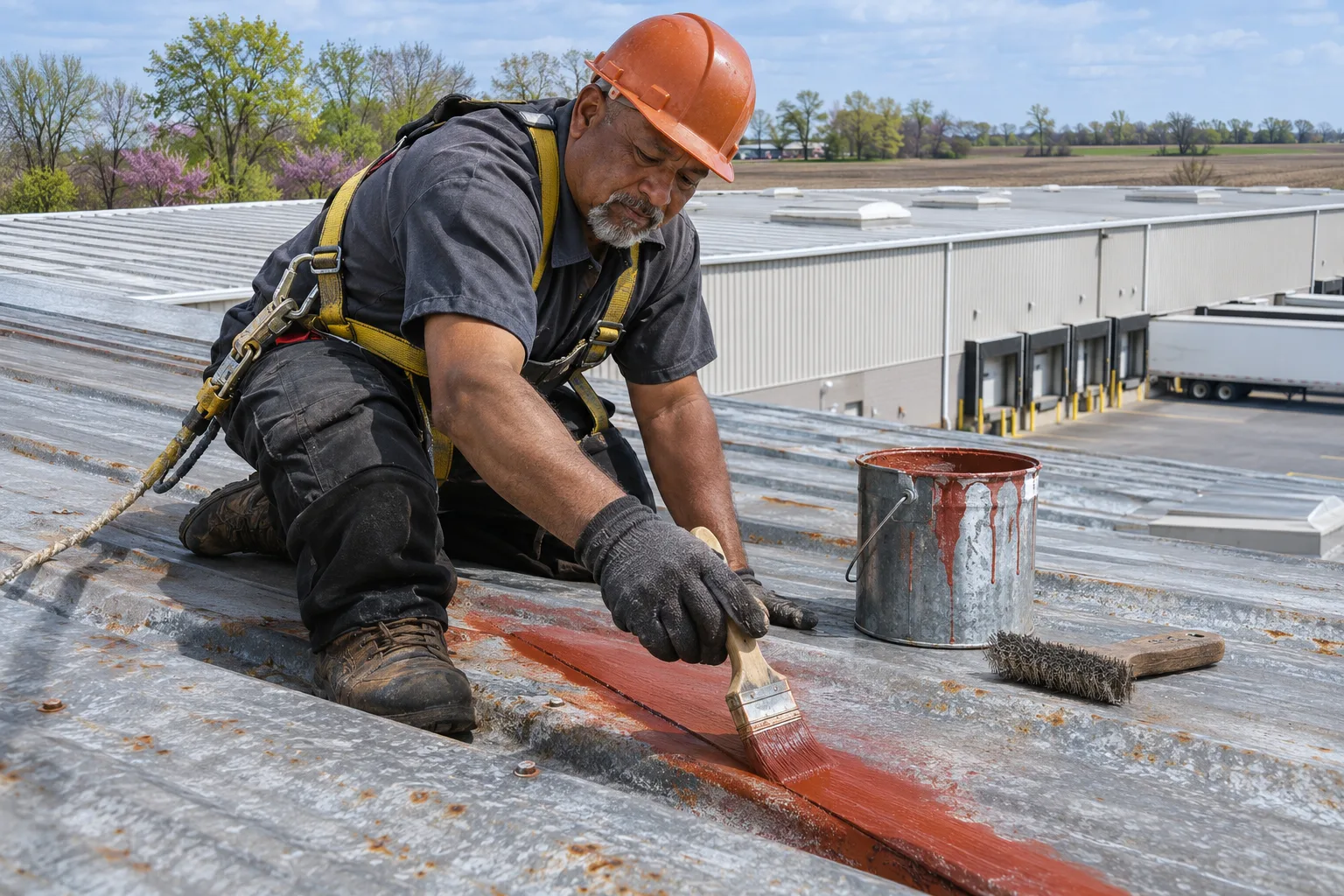
Heavier rust and lap work across a plant roof gets the full commercial metal system.
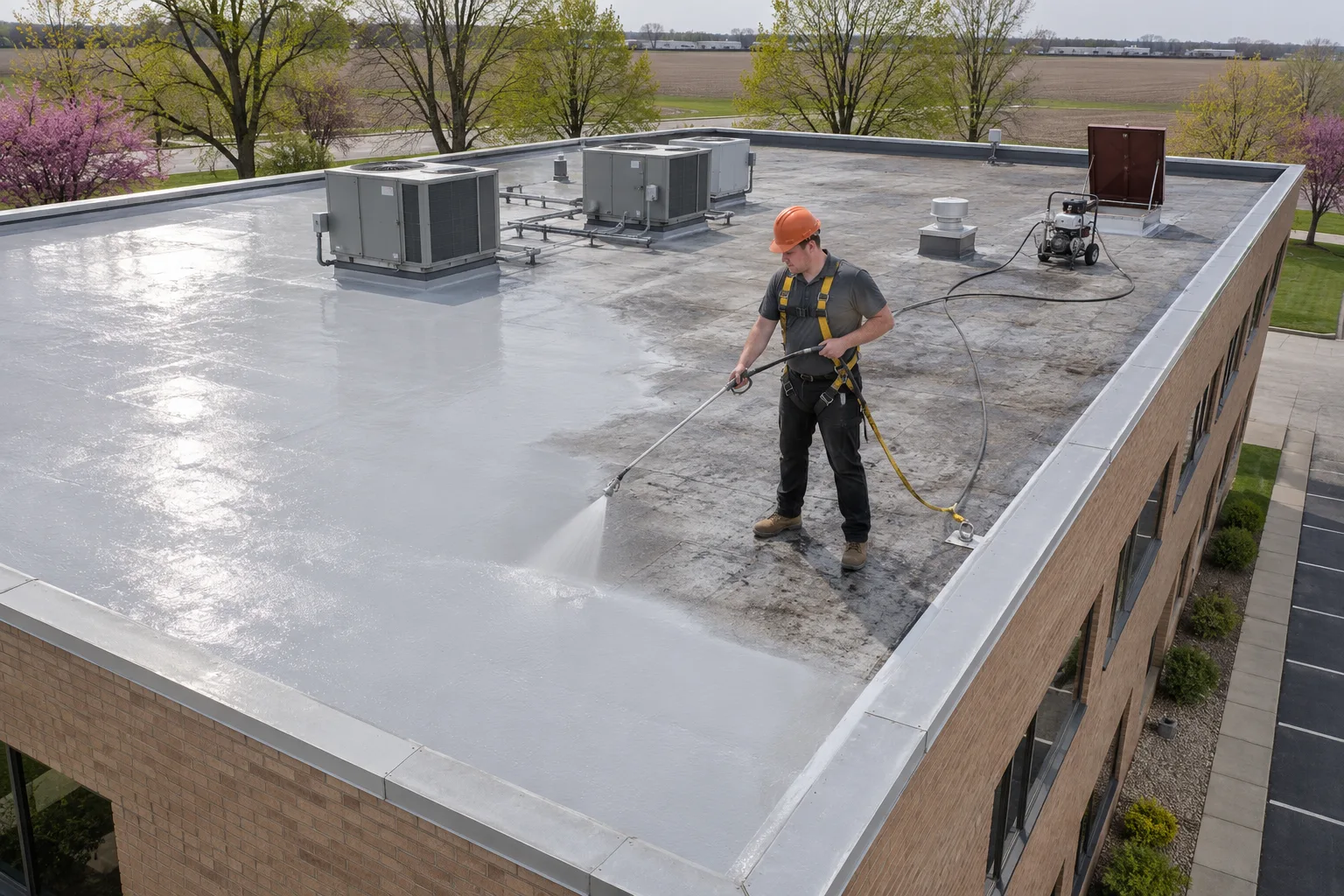
Low valleys and flat spots that hold water get silicone instead of acrylic.
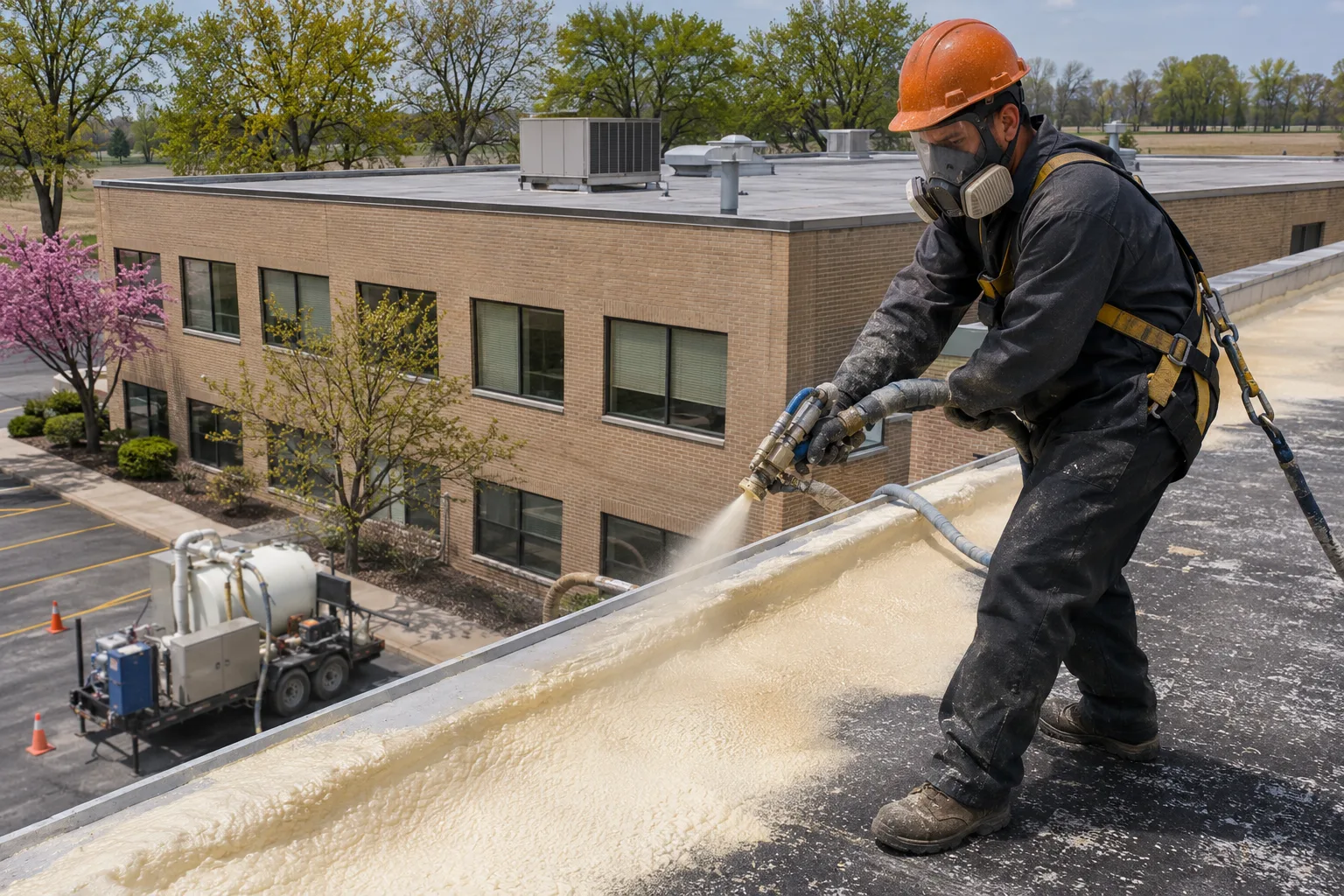
Roofs leaking at laps everywhere get foam, with acrylic or silicone on top.
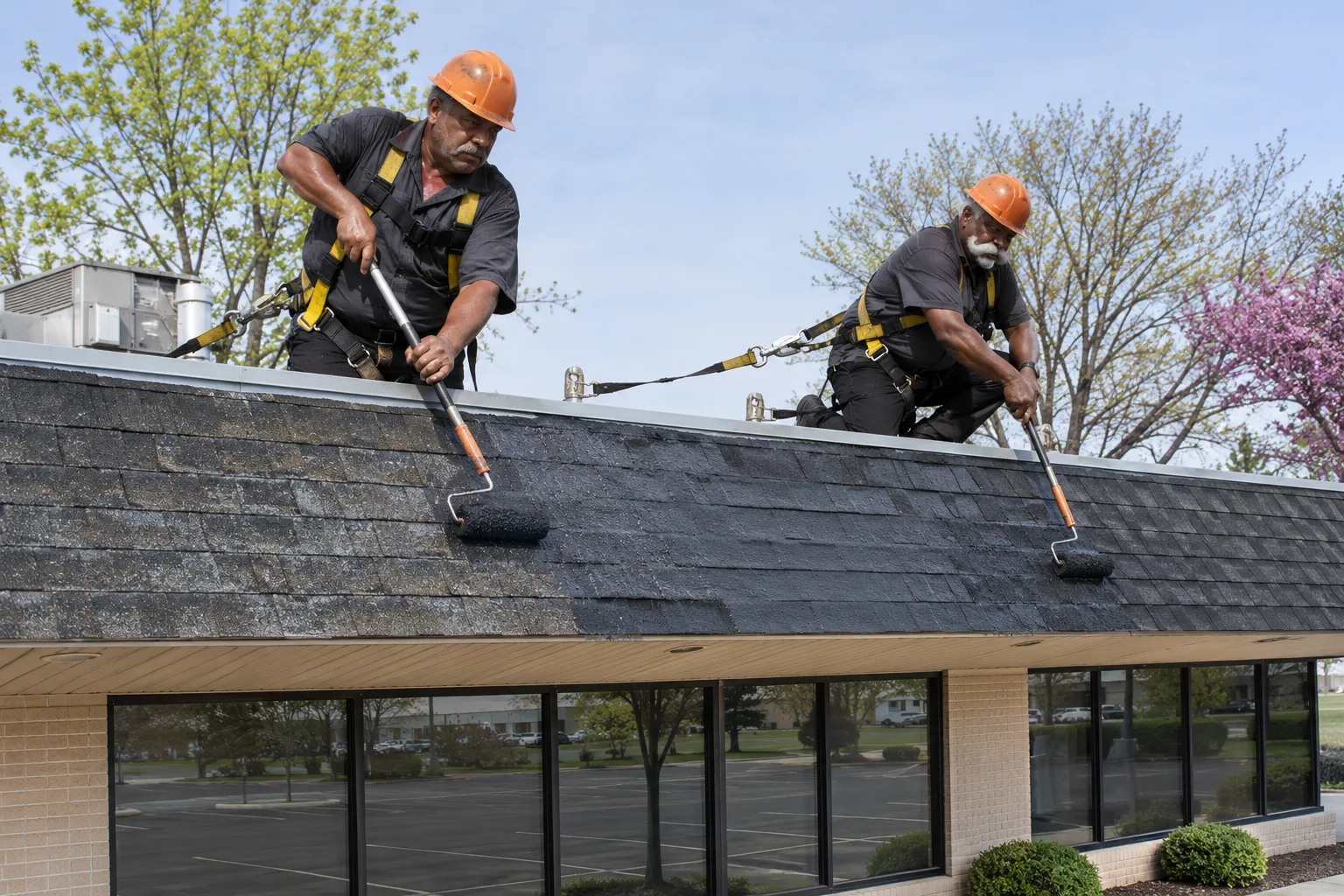
Asphalt shingle sections take a breathable coating made for shingles.
Questions owners ask before choosing acrylic for a metal roof.
On pitched metal roofs that drain well, yes. Acrylic bonds to primed steel, reflects sun, and flexes as panels move. It needs dry, mild weather to cure and should never sit under standing water for long, so low valleys get a different product.
Most systems use a base coat and a topcoat, often in two shades so full coverage is easy to see. The dry film thickness on the data sheet matters more than the pass count. Laps and screws get extra build with fabric first.
In warm, dry weather acrylic dries to the touch in a few hours, and full cure takes longer. Cool air, humidity, and dew slow it down, and rain can wash fresh acrylic off. We coat in mid-day windows with a dry forecast.
After the rust is treated, it can. Panels are washed, loose scale is wire-brushed off, and a rust-inhibiting primer goes on every spot. Steel rusted through is replaced first, because acrylic over loose rust blisters and peels within a few seasons.
Hail dents panels, cracks old sealant, and can bruise or puncture the coating. After a storm we walk the roof, record the damage, and repair punctures and loosened screws. Most dented roofs can still be coated once those details are fixed.
The pitched parts take it well. Low spots that hold water break acrylic down, so they get silicone or a drainage fix, and acrylic covers the rest of the roof.
Tell us the roof size and how it drains. We will check the rust and runoff and price an acrylic system.