Owner
- Every lap is covered at once instead of one at a time.
- Insulation is added without a tear-off.
- Recoating protects the foam for years.

As a Fort Wayne spray foam roofing contractor, we spray foam over metal panels and flat roofs to cover every lap at once and add insulation.
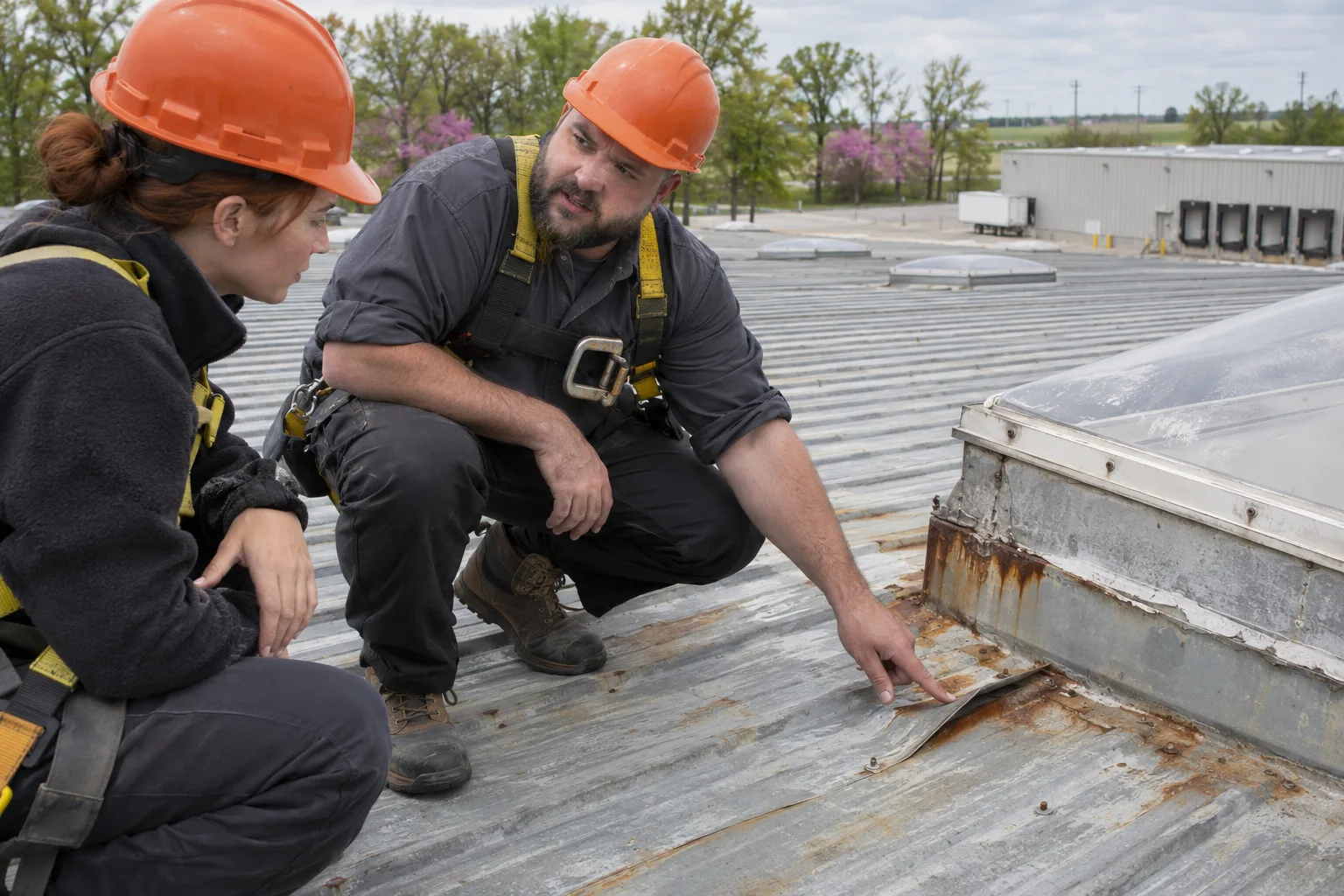
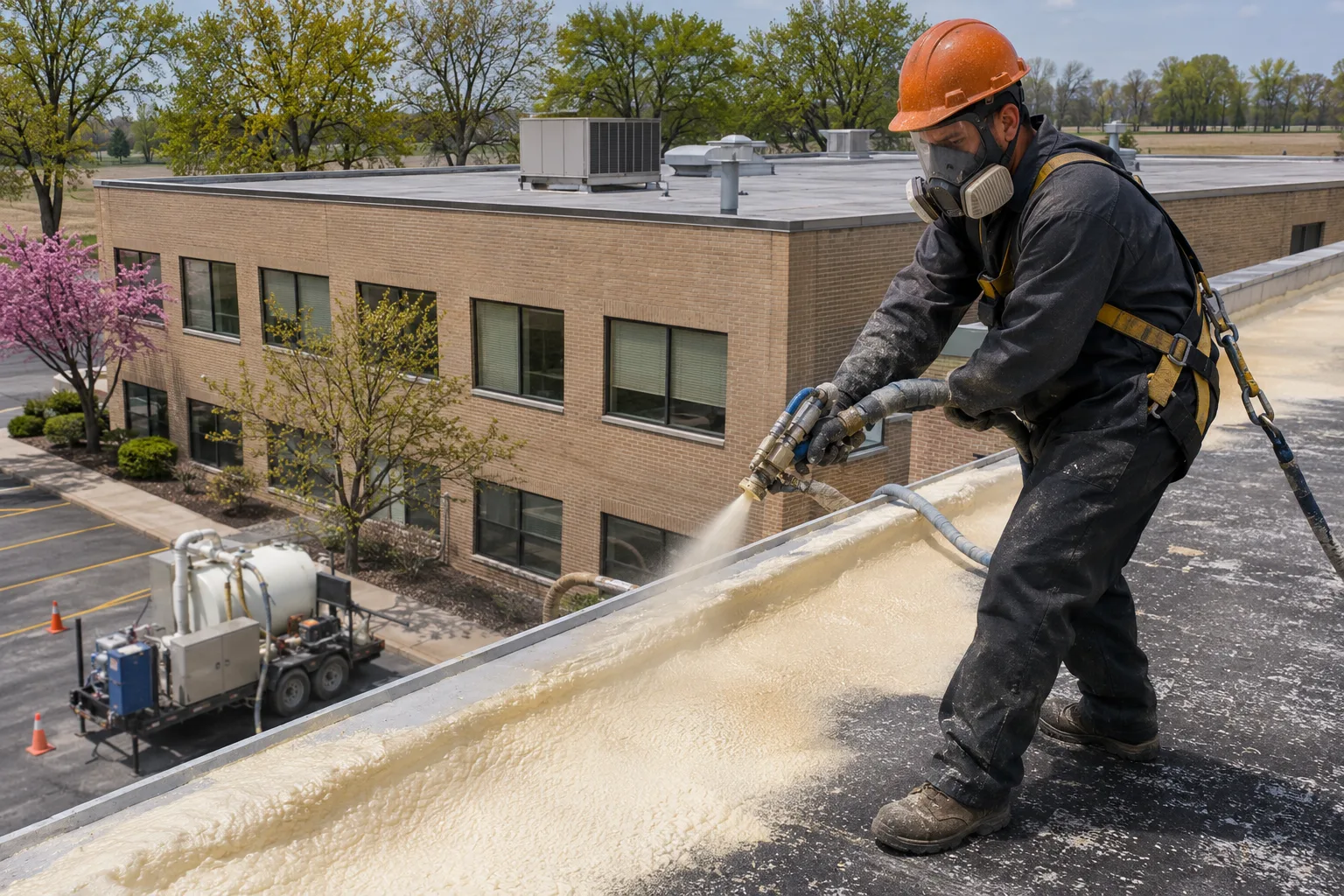
Fort Wayne spray foam roofing fits roofs that leak in many places or need more insulation. These lists show where foam works best.
Foam solves some problems well and creates new upkeep. These are the conditions we sort first.
When dozens of laps leak at once, sealing each one is slow. Foam covers every lap in one continuous layer after the panels are cleaned.
Upper offices that bake in July point to thin insulation. Foam adds insulation on top of the panels without opening the ceiling.
Foam can be sprayed thicker toward the high side, building slope that moves water to the drains.
Pocked foam needs its topcoat checked right away. Bruises are sealed so water never reaches the foam beneath.
Brown, crumbly foam has lost its UV shield. That roof needs a recoat soon, before the foam itself breaks down.
Overspray travels on wind past the roof edge. Vehicles are moved or covered and spray days are picked for calm air.
Foam goes on Fort Wayne roofs in four ways. The roof walk decides which one, and the estimate names the foam thickness and topcoat.
| Plan | Roof Type | Prep | Topcoat |
|---|---|---|---|
| Foam Over Metal Panels | Exposed-fastener metal roof | Wash, prime rust, seal screws | Silicone or acrylic |
| Foam Over A Flat Roof | Built-up or single-ply | Remove wet areas, clean surface | Silicone is most common |
| Tapered Foam For Drainage | Flat roof that ponds | Same as above, plus a slope plan | Silicone |
| Foam Roof Recoat | Existing foam roof | Wash, repair bruises and punctures | Fresh coat of the original type |
Foam gives each group something different, along with a recoat schedule to keep up.
Call and tell us how many spots are dripping. When leaks are everywhere, foam can cover the whole roof in one job.
(260) 620-8962Foam needs a dry roof and calm air. These are the steps, in order.
We walk the roof, take moisture readings and cores, note every unit and penetration, and look at where cars park around the building.
Wet insulation and failed patches are cut out and replaced so the foam bonds to a dry surface.
Metal is washed and rust is primed. Vents, units, and nearby vehicles are masked or moved to keep overspray where it belongs.
Foam goes on in passes to the planned thickness, filling the ribs and building slope where the plan calls for it.
Silicone or acrylic goes over the foam within a day of spraying, and thickness is checked across the roof.
When foam is more than the roof needs, one of these systems fits.
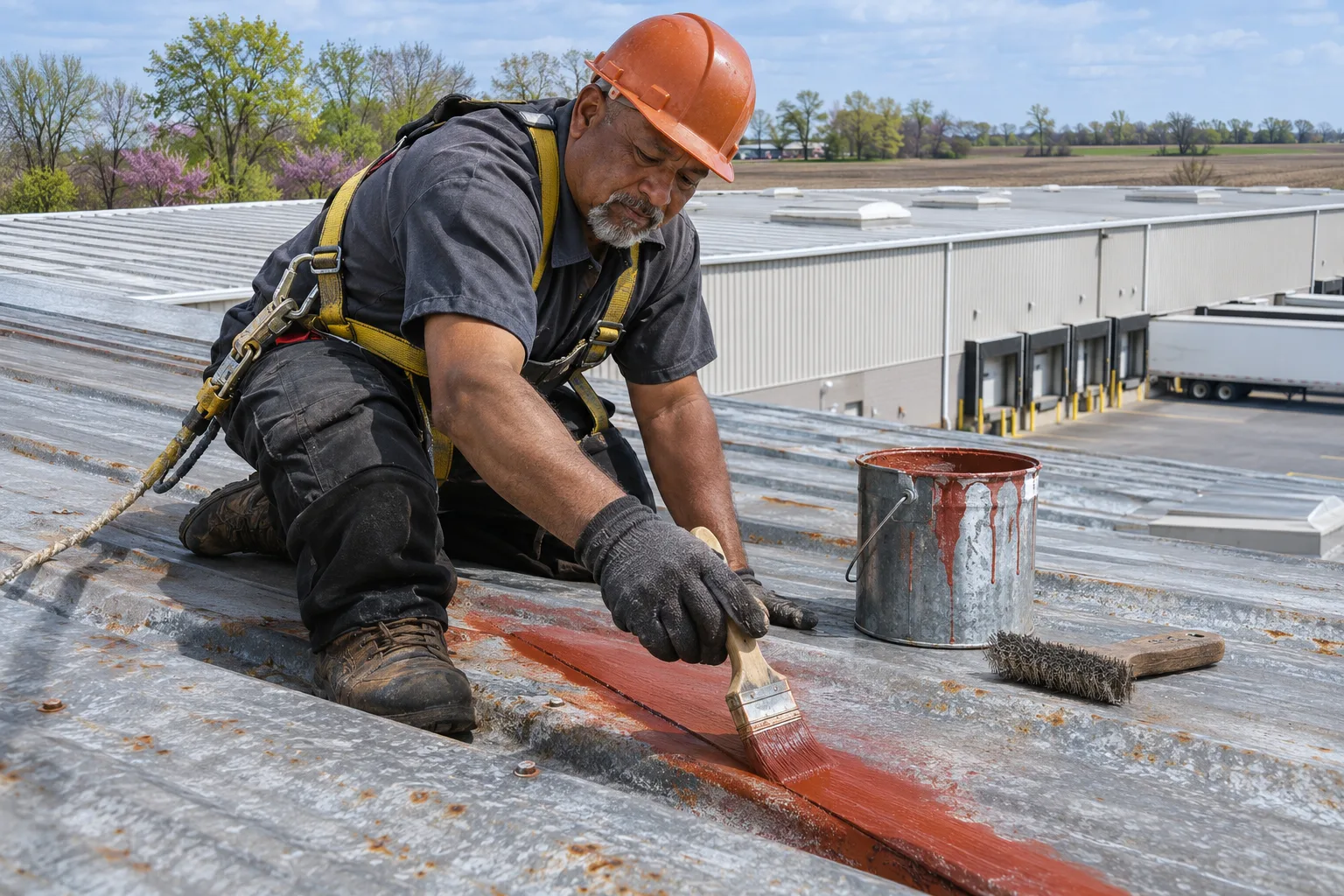
Leaks at a handful of laps are fixed and coated with the metal system instead.
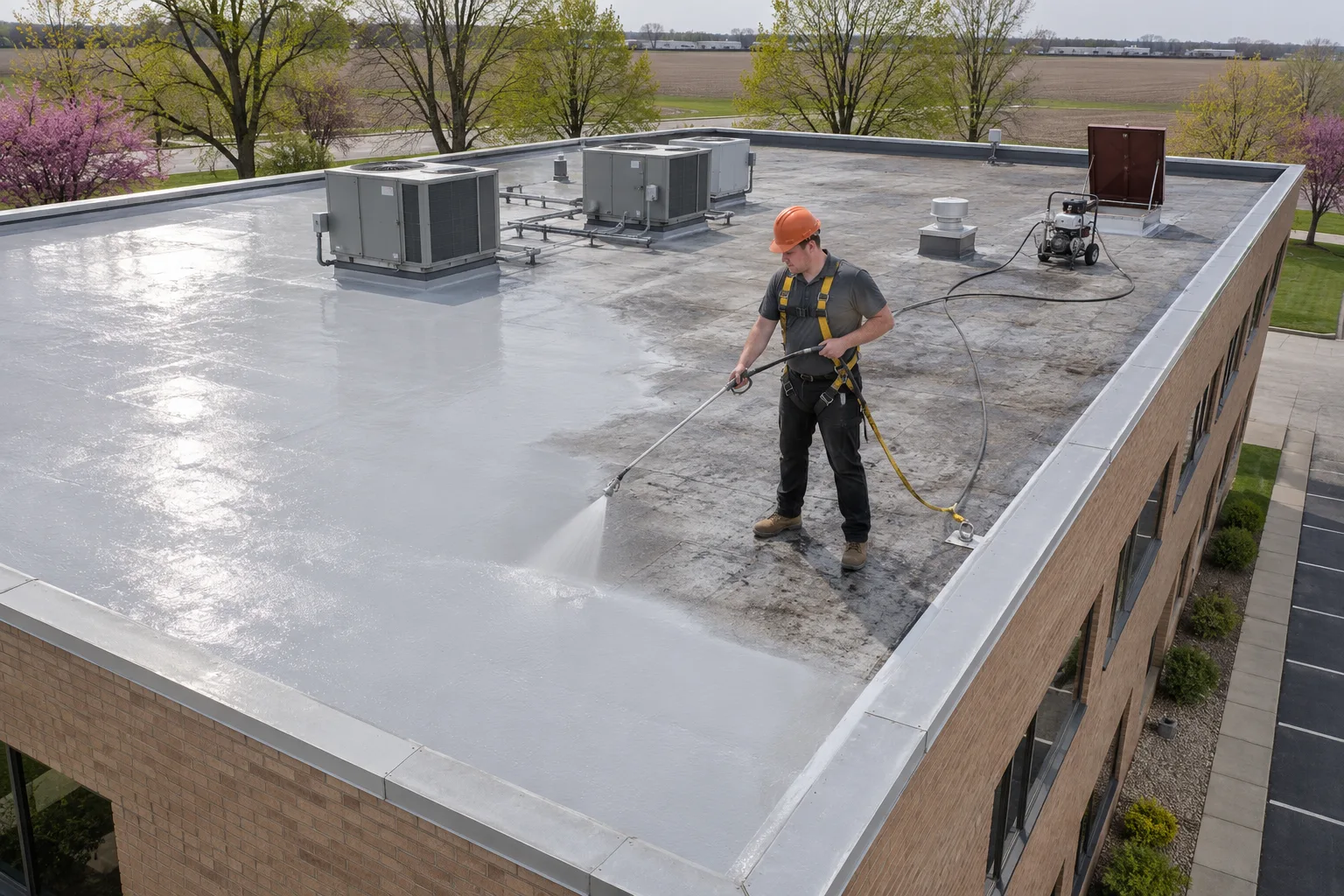
Silicone is the usual topcoat over foam and a system of its own on low roofs.
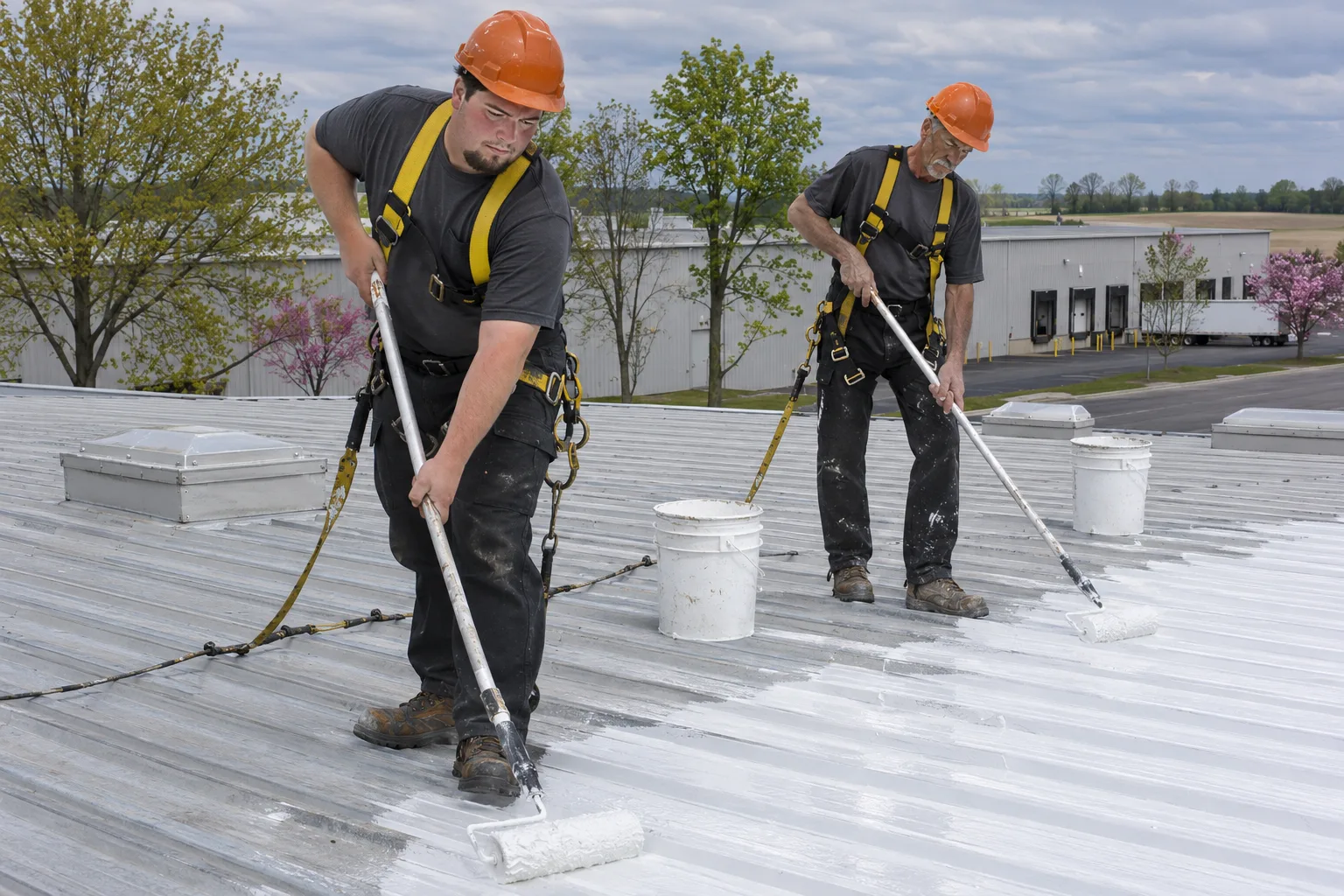
Pitched roofs that drain well take acrylic at a lower cost than foam.
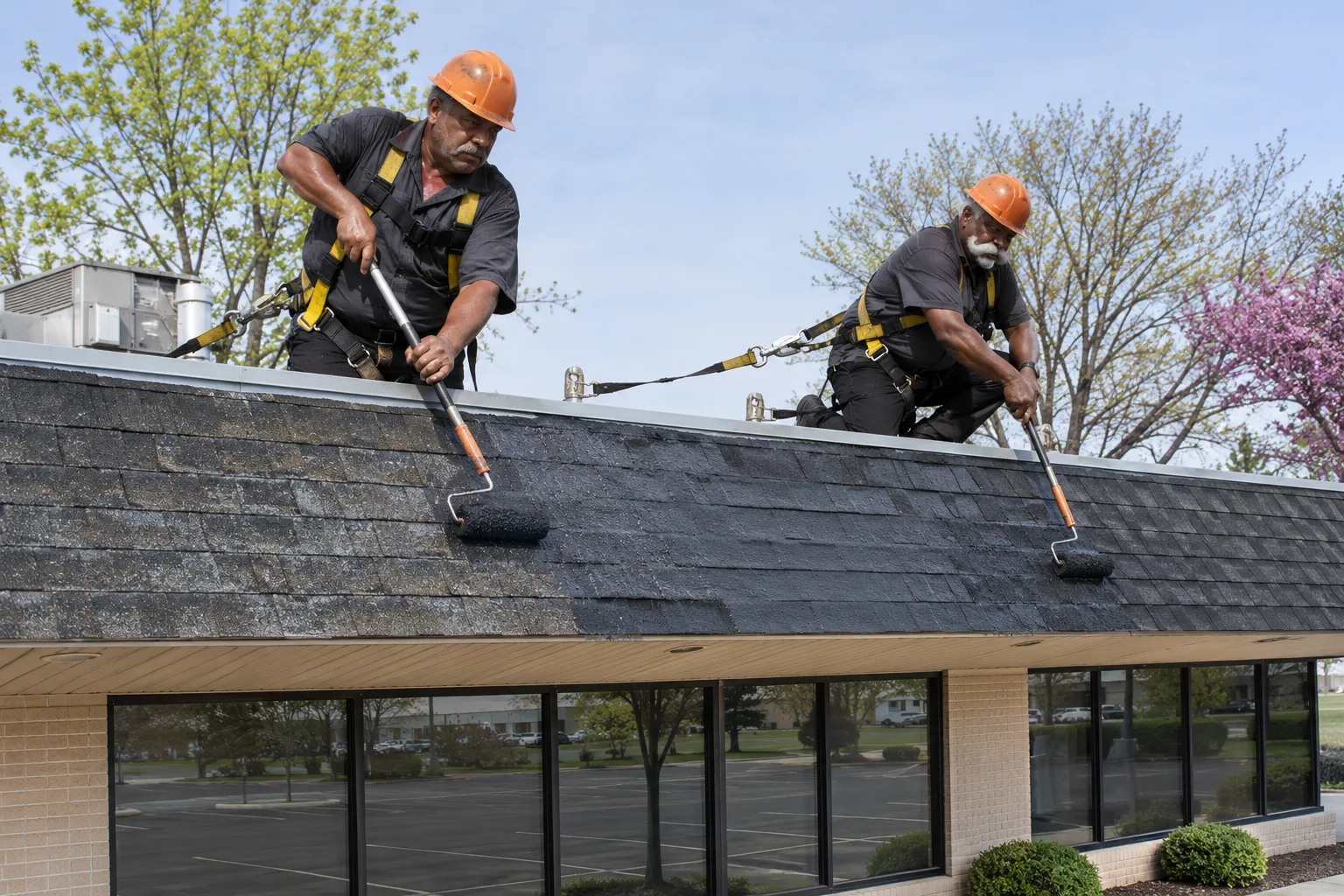
Shingle sections on the same property get a shingle coating.
What owners ask before choosing foam.
Yes, over clean, prepared panels. Foam fills the ribs and forms one continuous insulated layer, then a silicone or acrylic topcoat shields it from sun. Foam can also be built thicker in places to slope low metal roofs toward the drains.
On the plus side: every lap covered, added insulation, low weight, and slope where needed. On the minus side: it needs dry weather and careful spraying, overspray must be controlled, and the topcoat needs checks and recoats over time. Big, simple roofs suit it best.
Weather and upkeep. Foam cannot go on wet or frosty surfaces, so the season is shorter in northeast Indiana. The topcoat must be renewed or sunlight breaks the foam down, and hail bruises or punctures need sealing quickly.
We wash the foam, look for blisters, bruises, and punctures, and repair them with foam or sealant. A fresh silicone or acrylic coat then covers the whole roof. Recoating before the old coat wears through keeps the foam itself from needing replacement.
Foam thickness, the count of units and penetrations, and the topcoat chosen drive it. Removing wet material, tapering for drainage, and protecting parked vehicles add cost. Our coating range runs about $2.50 to $4.00 per square foot against $5 to $8 for replacement.
It can. The state commission lists the 2010 Indiana Energy Conservation Code, 675 IAC 19, as in effect for commercial buildings, and insulation rules can apply when a roof is altered. We ask the Allen County Building Department whether a project triggers them.
Tell us the roof size and how many places it leaks. We will check moisture and parking and price the foam and topcoat.